A suitable syrup ratio won’t prevent contamination if a honey-harvest super is still on the hive. If you’re learning how to make sugar syrup for bees in the UK, use equal weights of sugar and water for light 1:1 syrup, or a stronger 2:1 mix for autumn stores. Don’t feed syrup while a super intended for harvest is on the hive, as bees may store it alongside honey.
Getting the recipe right matters, but so does timing. The right mix depends on whether you’re supporting spring activity or helping the colony build winter stores. Handle and store syrup carefully.
This guide covers practical ratios, preparation, feeding around honey supers and storage to help reduce fermentation and honey contamination. It also explains when light or heavy syrup is appropriate, so you can choose a mix to suit your colony.
Key Takeaways
- Measure sugar and water by weight for a reliable mix; equal weights make a light 1:1 syrup.
- Choose the ratio to suit the season, with stronger syrup used to help build autumn stores.
- Keep syrup feeding separate from honey production: don’t feed while a super intended for harvest is on the hive.
- Make manageable batches and use stored syrup within 1-2 weeks.
- Learn how timing, storage and the colony’s needs shape the right feeding choice.
Can I store sugar syrup, and for how long?
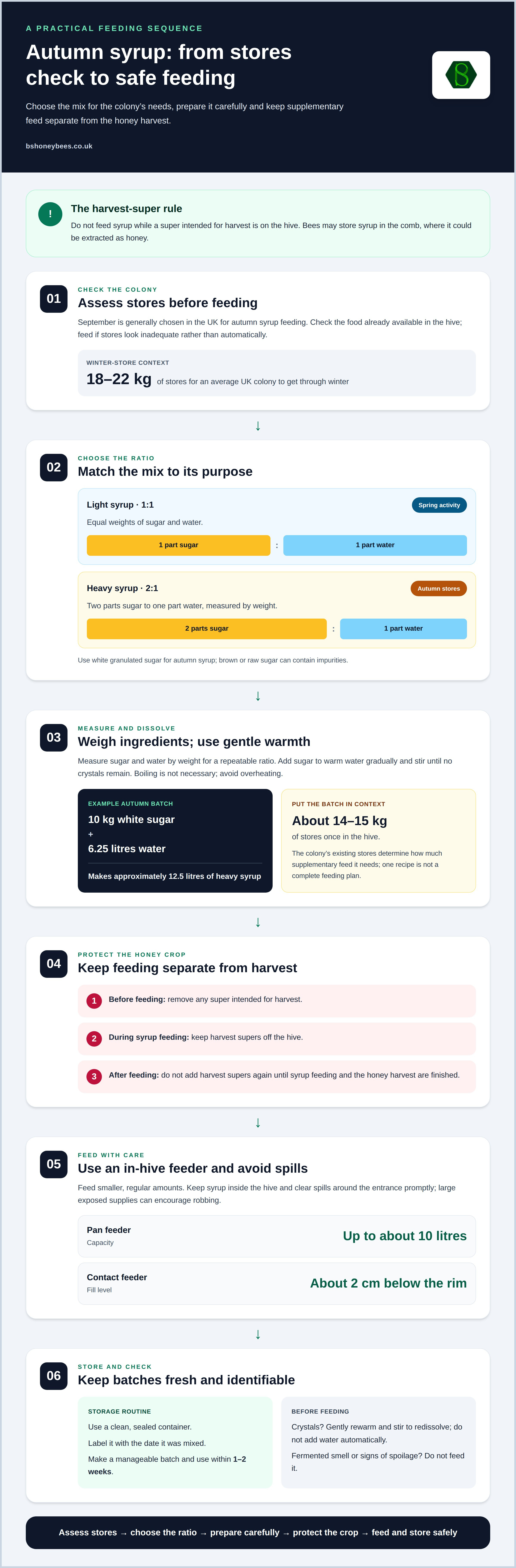
Stored sugar syrup should be used within 1-2 weeks. Make a batch sized for your colony’s likely needs, rather than preparing a large quantity well ahead. Keep it in a clean, sealed container and label it with the date you mixed it. This gives you a straightforward way to use older syrup first and avoid leaving a batch forgotten beyond its recommended storage period.
Measure sugar and water by weight when accuracy matters. A 1:1 syrup means equal weights of sugar and water, not equal scoops. For example, weigh 1 kg of white granulated sugar and combine it with 1 kg of water. This mixture is approximately 50% sugar by weight. A 2:1 ratio means two parts sugar to one part water by weight, producing a much thicker syrup.
Volume measurements can mislead because sugar and water weigh differently. One cup of refined sugar weighs 200 grams, whilst one cup of water weighs 236 grams. So, equal cup measures do not create a 1:1 ratio by weight. If you’re using a jug or cup rather than scales, follow a recipe designed for volume measurements. Don’t assume that a cup-for-cup mix matches equal weights.
Water temperature affects how readily sugar dissolves. Add sugar gradually to warm water, stirring until no crystals remain. For a concentrated mix, use warm water and stir gently; stronger syrup is harder to dissolve than 1:1 syrup. A UK beekeeper need not boil water to make syrup. If gentle heating is needed, warm the mixture carefully and stop once the sugar has dissolved. Avoid overheating the syrup.
Honey provides a useful comparison: cured honey is about 80% sugar and 20% water. That is a 4:1 sugar-to-water ratio, much more concentrated than 1:1 syrup. Sugar syrup is more dilute than cured honey, so the two are not identical. The ratio you choose should reflect the feeding purpose, rather than an attempt to copy honey exactly.
Check stored syrup before feeding. If crystals have formed, gently rewarm the syrup and stir to redissolve them. Don’t treat crystallisation as a reason to add extra water automatically, since that changes the ratio. If the syrup smells fermented or shows signs of spoilage, don’t feed it. Making a fresh, smaller batch is a practical way to keep stored feed within the 1-2-week period.
To make sugar syrup for bees in the UK, weigh the sugar and water, dissolve the sugar fully and date the container. Weighing both ingredients makes the ratio repeatable; using the syrup promptly limits storage time.
Can I feed syrup while honey supers are on?
No. Don’t feed sugar syrup while a super intended for harvest is on the hive. Bees may store syrup in the comb, where it could be extracted as honey. Remove harvest supers before feeding, and don’t add them again until syrup feeding and the honey harvest are finished.
Supplementary feeding depends on the colony’s stores and the season. In September, UK beekeepers commonly feed syrup to help colonies build winter stores. An average UK colony needs about 18-22 kg of stores to get through winter. Assess the food available in the hive, rather than feeding automatically. If stores look inadequate, feed before adding any honey supers intended for harvest.
Choose a feeder that keeps syrup inside the hive. A pan feeder can hold up to about 10 litres, whilst a contact feeder is filled with syrup to about 2cm below the rim. Whichever type you use, position it so bees can access the feed without exposing syrup outside. The practical UK best practice is to feed in a hive feeder, not in the open, and keep feeding separate from harvest supers.
Feed smaller, regular amounts. Large exposed supplies can encourage robbing, when bees from other colonies take stores. Avoid spills around the hive entrance and clear any promptly. If feeding during summer, consider whether a harvest super is present: syrup given during honey production can contaminate the crop, even when the recipe is correct.
Winter emergency feeding is different. If you think the colony’s food stores are depleted, fondant can provide emergency feed. Place it over the crownboard’s feeding hole; an eke may be needed to make room for the fondant and its container. Keep fondant inside the hive, and don’t leave syrup accessible during honey harvesting. Match the feed to the situation.
There’s no fixed number of days between syrup feeding and adding supers in these recommendations. The key is to stop syrup before placing a super intended for harvest, and keep it off throughout the honey crop. This avoids giving bees access to syrup that could end up in harvested honey. Protecting the character of English honey starts with keeping supplementary feed separate from the harvest.
Autumn and winter sugar syrup
Autumn feeding can help a colony build winter stores. In the UK, September is generally chosen for feeding syrup for this purpose. Bees need time to take in and process the feed before colder conditions limit activity. Assess the colony’s stores first, then decide whether supplementary feed is needed and when to provide it.
For autumn stores, a stronger sugar syrup is commonly used. This recipe is also described as 2:1 syrup. Use white granulated sugar, rather than brown or raw sugar, which can contain impurities. Add the sugar to warm water and heat the mixture gently, stirring until the crystals dissolve. Boiling the water isn’t necessary, although concentrated syrup dissolves more readily with warmth.
For a larger batch, combine 10 kg of white sugar with 6.25 litres of water. This makes approximately 12.5 litres of heavy syrup. Keep the mixture warm enough to dissolve the sugar, but don’t overheat it. Thick syrup is harder to prepare without hot water, so steady stirring and gentle heat help avoid undissolved crystals.
That 12.5-litre batch is equivalent to about 14-15 kg of stores once in the hive. An average UK colony needs about 18-22 kg of stores to get through winter. These figures help put a batch into context, but don’t treat one recipe as a complete feeding plan. The colony’s existing stores determine how much supplementary feed it needs.
Bees need time to process syrup before storing it. The guidance is to reduce the water content below 20% before the feed is stored. Allow the colony time to process the syrup during autumn; late feeding may be less effective as conditions cool. Honey bees may stop drinking syrup when it is around 50°F, so feeding depends partly on their ability to take it down.
Use a feeder inside the hive, not outside. This keeps feed accessible to the colony and less exposed to other bees. Feed smaller, regular amounts to reduce the risk of robbing. If winter stores seem depleted and bees are no longer taking syrup, fondant can be placed over the crownboard’s feeding hole as emergency feed. An eke may be needed to fit the fondant and its container.
Avoiding honey contamination with syrup
Bees may store syrup in comb alongside gathered nectar. If that comb is later extracted, syrup may end up in the honey. Keep supplementary feeding separate from honey production: remove harvest supers before feeding, and don’t replace them until syrup feeding has ended and the honey crop is harvested. This separation is essential; a carefully measured recipe cannot prevent contamination if feeding and harvest overlap.
Plan feeding around the intended use of each super. A super intended for harvest must not be on the hive during syrup feeding. If the colony needs feed during the honey season, prioritise its needs but keep harvest supers off. Syrup stored in comb is not nectar gathered from flowers. If both are stored in frames intended for extraction, their contents can be mixed in the crop.
Keep syrup-making equipment separate from equipment used to handle honey. Mix and store feed in a clean container, and don’t transfer syrup with tools used for extracted honey. Wipe drips from the feeder and hive exterior promptly. Spilled syrup can attract bees and increase the risk of robbing. An inside-hive feeder keeps feed contained and away from exposed honey-handling areas.
Choose white granulated sugar for the syrup recipe. Brown and raw sugars can contain impurities, so they aren’t recommended for bee feed. One comparison found 2.15% ash in a researched organic sugar, against 0.07% in researched non-organic refined sugar. That figure describes ash content, not honey contamination itself. It reinforces the value of using suitable refined sugar rather than assuming every sugar type behaves alike.
Keep feeding records alongside your super-handling notes. Record when syrup goes into the hive, when feeding stops and when harvest supers are added. These dates help distinguish feeding periods from honey-production periods when reviewing frames. If bees are still taking syrup, don’t put a harvest super on the colony. The key question is whether supplementary feed could be stored in comb intended for extraction.
Before extraction, keep frames from syrup-feeding periods out of the harvest batch. Bees may have stored feed in those cells, even if they have capped them. Capping alone doesn’t show whether stores came from syrup or nectar. Separate harvest comb according to its feeding history and keep the honey crop distinct from frames used for supplementary stores. Careful handling helps protect the integrity of extracted honey.
Sugar syrup ratios for bees
Choose a syrup ratio to suit the colony’s needs, not just the calendar. Light syrup supports spring activity, while thicker syrup is used to build stores later in the year. Ratios compare sugar with water, but recipes may use weight or volume. State which measure you’re using so the mix can be reproduced accurately.
For spring feeding, a 1:1 syrup is commonly used to stimulate bees and support comb building. One practical recipe combines 1 kg of white sugar with 1.25 litres of hot water. The recipe is described as 1:1, though those quantities are not equal by weight. This illustrates why it’s useful to follow a specific recipe rather than relying on the ratio label alone.
For late summer or early autumn, stronger syrup can help colonies build stores quickly. A common mix uses about 1.6 kg of sugar per 1 litre of water. Beekeepers may call this “2:1” syrup, although the recipe’s measured quantities are not a literal 2:1 ratio by weight. The name is often shorthand for a strong late-season feed.
Another autumn recipe uses 1 kg of sugar to 625 ml of hot water, also described as 2:1 syrup. For a larger batch, 10 kg of white sugar with 6.25 litres of water makes approximately 12.5 litres. These named recipes make comparison easier, but don’t interchange quantities between them without checking the measurement basis.
By weight, 1:1 means equal weights of sugar and water, giving approximately 50% sugar. A 1.6:1 weight ratio contains approximately 61.5% sugar. Maximum-strength 2:1 syrup contains approximately 67% sugar by weight at about 20°C. At that temperature, the mixture is close to its solubility limit, so dissolving all the sugar becomes harder.
The practical distinction is clear: use light syrup when supporting spring activity, and stronger syrup when building autumn stores. Don’t assume a recipe labelled “2:1” always has precisely the same concentration. Read the ingredient quantities, note whether they’re measured by weight or volume, and use the same method each time. This keeps feeding consistent and helps prevent confusing a lighter mix with a heavy one.
For dependable comparisons, record the sugar and water quantities beside the ratio label. Explore beekeeping essentials as you prepare your feeding plan.
BS Honey Bees Ltd
BS Honey Bees Ltd supports beekeepers developing an apiary with suitable bees and hive equipment. If you’re planning for a new colony alongside your feeding arrangements, its F1 Buckfast Queens, Carniolan Queens, 5 / 6 Frame Nucs and 2 in 1 Poly Nucs may fit your plans. Matching colony plans with suitable equipment helps organise seasonal management, including when supplementary feed and honey supers are needed.
BS Honey Bees Ltd supplies queens, nucleus colonies, hives and beekeeping equipment to support apiary plans. Syrup ratios still depend on the colony’s needs and the season, and feeding must remain separate from honey intended for harvest. Explore the company’s beekeeping stock and equipment to plan your apiary.
Make feeding part of your apiary plan
Treat syrup feeding as one part of managing the apiary through the seasons. Before feeding, consider what the colony needs and how that fits with your honey plans. A clear plan keeps supplementary feeding purposeful and connected to the next stage of colony management.
Knowing how to make sugar syrup for bees in the UK gives you a practical starting point; applying it well means adapting your decisions to the colony in front of you. Build confidence by keeping the purpose of each feed clear, and make your next step based on the needs of your apiary. If you’re planning your beekeeping setup or have questions about suitable stock, contact BS Honey Bees Ltd for advice. Take the next season one considered decision at a time, and keep your colonies’ needs at the centre of your plan.
Frequently Asked Questions
Do I need to heat the water?
No, you don’t need to boil water to make bee syrup. Warm water helps sugar dissolve, particularly in a concentrated mix, so stir as you add the sugar. If crystals remain, gentle heating can help; avoid overheating the mixture. The aim is to dissolve the sugar fully. Let the syrup cool before putting it in a feeder, and never pour hot syrup into a feeder in the hive.
Do my bees need feeding?
Feed according to the colony’s stores and needs, rather than following the calendar alone. Assess the food available in the hive, the season, forage and whether bees are bringing in nectar. Supplementary feed may help when natural supplies are scarce or winter stores need building. If the colony has adequate stores and forage, extra syrup may not be necessary. Keep feed away from harvest supers.
Should I use white or brown sugar?
Use white granulated sugar for bee syrup. Brown and raw sugars can contain impurities, so they aren’t recommended. Refined white sugar provides a consistent ingredient that’s easy to weigh and mix, making the recipe easier to repeat. Don’t substitute another sugar simply because it’s available in the kitchen. Mix only what you need, and keep syrup-making utensils clean and separate from honey-handling equipment.
What if my syrup crystallises?
Gently rewarm crystallised syrup and stir it until the sugar dissolves again. Don’t add water automatically, as that changes the concentration and may leave you with a different mix. Check the syrup’s condition as you work: crystallisation is different from fermentation or spoilage. If it smells fermented or looks spoiled, discard it rather than feeding it. A clean container and sensible batch size make syrup easier to manage.
What’s the difference between 1:1, 1.6:1 and 2:1 (max) syrup?
The ratios compare sugar with water by weight. A 1:1 mix has equal weights and is approximately 50% sugar. A 1.6:1 mix contains approximately 61.5% sugar by weight. Maximum-strength 2:1 syrup is approximately 67% sugar by weight at about 20°C. The higher the first number, the more concentrated the syrup; dissolving the sugar becomes harder as the mix approaches its solubility limit.
When should I feed 1:1, 1.6:1 or 2:1 (max)?
Use 1:1 syrup for spring or early-season feeding when supporting colony activity and comb building. Stronger 1.6:1 syrup is used in late summer or early autumn to help build stores. Maximum-strength 2:1 is another thick option, but is harder to dissolve. Choose according to the colony’s purpose for feeding and the season, and don’t feed syrup while a honey-harvest super is on the hive.
What sugar-to-water ratios should UK beekeepers use for thin and thick sugar syrup?
For thin syrup, use a 1:1 sugar-to-water ratio by weight: equal weights of each ingredient. For thick syrup, use 1.6:1 or 2:1 by weight, with twice as much sugar as water for the maximum-strength mix. Weighing avoids confusion between volume and weight measurements. If following a recipe written in litres or cups, use its stated quantities rather than assuming equal volumes make equal weights.