Buying honey can support bees, but only when beekeeping puts the colony’s needs first. Ethical beekeeping in the UK means taking only surplus honey and leaving bees enough food to get through winter. The impact depends on how the hive is managed, not simply on whether honey is bought.
It’s reasonable to wonder whether taking honey harms the bees that made it. Honey is a food store for a colony, especially when little nectar is available, so removing too much can leave bees short of reserves. Buying from local beekeepers who prioritise bee welfare can support more responsible practices, while treating honey as an occasional choice helps keep the focus on how it is produced.
This guide explains how honey harvesting, pollinator-friendly habitats, and pest and disease management affect bee welfare. It also covers balanced hive management and offers practical questions to ask a beekeeper, helping you make an informed choice about the honey you buy.
Key Takeaways
- Choose honey with its production in mind: ask how much is harvested and whether the colony keeps enough reserves for winter.
- Support pollinators by favouring forage-rich habitats with native, pollinator-friendly plants.
- Understand why pest and disease management matters, and how integrated approaches can help protect colony health.
- Look for balanced hive care, including appropriate space, ventilation and gentle, purposeful inspections.
- Ask local beekeepers about their treatment choices, honey harvesting and approach to bee welfare before you buy.
Pollinator protection and biodiversity
Ethical beekeeping connects colony care with the wider landscape that provides forage. In the UK, that means considering habitat, pollination, and the food stores a colony needs for winter.
Pollinator habitats and biodiversity
Pollinator habitat provides flowering plants and shelter for bees and other wildlife. Plant pollinator-friendly species around an apiary to extend forage and support biodiversity beyond the hive. Habitat loss, pesticide use, climate change, and disease can all place pressure on bee populations. A honey bee colony depends on suitable forage, so consider the plants across the surrounding landscape, not only within the apiary.
Bees can fly within a 5 kilometer radius of their hive, so forage may come from gardens, field edges and other nearby places. That range also means a single planting area cannot meet every colony’s needs. A mix of flowering plants can offer a more varied supply, whilst habitats for other wildlife help strengthen local biodiversity. Friends of the Earth says the UK government produced a Bee Action Plan following support for its Bee Cause campaign.
UK beekeepers must follow applicable bee-health and disease-control rules. Registration arrangements vary across the UK nations, so find out which local system applies before keeping colonies.
Pollination and food supply
Pollination occurs when bees transfer pollen between flowers, helping plants reproduce and set seed or fruit. Bees help pollinate crops and support biodiversity, contributing to food production and wild plants. Protecting forage helps support pollinators that contribute to food production and biodiversity.
Bees need flowering plants throughout their active season, not just a brief burst of blooms. Planting a range of pollinator-friendly species can provide forage at different times and create habitat for other wildlife. The surrounding landscape matters too: habitat loss and pesticide use can reduce available resources, while disease and climate change add further pressure.
Colony-safe honey harvesting
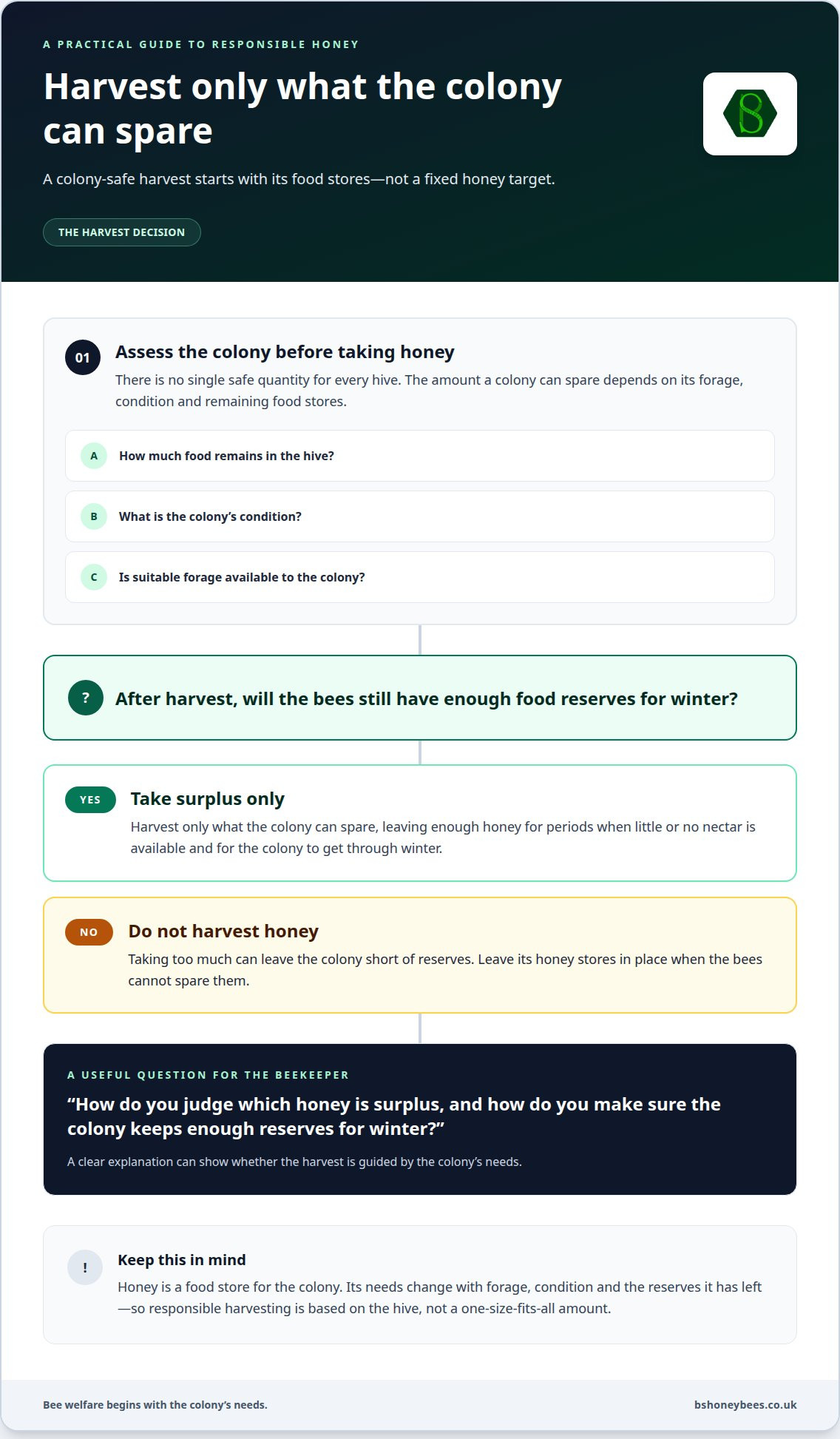
Colony-safe harvesting means taking only surplus honey and leaving bees enough reserves to survive winter. There is no single safe quantity for every hive: it depends on available forage, the colony’s condition, and its remaining food stores. Before harvesting, assess the colony’s reserves.
Honey is a food store for periods when little or no nectar is available. Taking too much can leave a colony short before spring, so harvesting should reflect what the bees can spare. Asking how a beekeeper judges surplus honey can reveal whether colony welfare guides the harvest. Choose English honey from a beekeeper who can explain this balance, keeping both the product and the bees in view.
Avoiding chemical pest and disease treatments
Ethical pest management balances colony welfare with action against genuine threats. Varroa mites and foulbrood can seriously affect honey bee colonies, so avoiding unnecessary chemicals must not mean ignoring disease.
Avoiding chemical treatments
Avoiding chemical treatments means prioritising prevention and targeted pest management over routine, indiscriminate use. A colony needs effective protection without interventions that are unnecessary for its condition. Integrated pest management can include drone comb trapping and hygienic queen breeding, which help manage pests through colony care.
Start with a clear reason for action: assess the colony, identify the concern, and choose a response suited to the problem. Drone comb trapping and hygienic queen breeding are two management tools, but neither replaces attention to disease. Varroa and foulbrood remain significant threats, so assuming every treatment is harmful can leave bees exposed. Responsible care weighs intervention risks against the risks of untreated infestation or disease.
Varroa mite treatment
Varroa management uses monitoring and proportionate control to limit harm to the colony. The mite is a serious pest, so ethical care does not mean refusing treatment when the colony needs it. Drone comb trapping can form part of an integrated approach, alongside hygienic queen breeding and ongoing observation.
Let the colony’s condition guide decisions instead of applying treatment automatically each summer or at a fixed interval. Record what you observe, what action you take, and how the colony responds. These notes support better-informed decisions and help avoid unnecessary intervention. If treatment is needed, follow the product instructions and relevant UK guidance; do not improvise doses or combine products.
Ethical feeding and disease care
Ethical feeding means assessing the colony’s food stores and supplying feed when reserves are inadequate. Disease management means identifying the problem and responding with suitable, proportionate care. Both steps matter: insufficient stores and untreated disease can undermine colony health.
Leave adequate honey for the bees before considering supplementary feed. Honeydew and buckwheat honeys can cause digestive problems in bees and may contribute to fatal nosematosis in a colony, so feed choice matters. If a colony has low reserves, choose feed appropriate to its condition and the season. Avoid feeding honey from an unknown source, which may spread disease between colonies.
For responsible production, keep feeding and treatment decisions separate from honey harvesting. Don’t sell or remove feed intended for the colony. If you’re exploring how beekeeping choices relate to honey, consider English honey production as part of the wider discussion.
Natural and balanced beekeeping
Natural, balanced beekeeping puts colony welfare at the centre of decisions. It supports bees’ natural behaviour while addressing practical needs such as space, food, and ventilation. The aim is a healthy colony, not simply a high honey yield.
Allowing bees to build their own comb supports their instincts and reduces exposure to synthetic materials. Observe activity at the hive entrance to learn about colony behaviour without opening the hive unnecessarily. Inspections still have a role, but frequent or invasive manipulation can disrupt the colony’s natural rhythms.
There’s no single fixed cost to start beekeeping in the UK. Your outlay depends on the hive, colony, protective clothing, and essential tools you choose, as well as ongoing care.
For ethical beekeeping, you need a hive and frames, protective clothing, a smoker, and a hive tool. A feeder may also be needed when the colony requires supplementary food. Choose equipment that allows safe management while providing suitable space and ventilation. Clean tools between colonies to reduce the risk of transferring disease.
Hive conditions matter through changing seasons. In winter, honeybees in a cluster try to keep some bees above 18°C as outside temperatures drop. This makes shelter and suitable hive management important. Avoid assuming that one hive arrangement suits every site, since exposure and local conditions affect the colony.
Overcrowding and poor hive maintenance can cause stress and contribute to disease. Check that the colony has adequate space and the hive remains ventilated. Make inspections purposeful: assess the colony’s condition, look for signs of problems, and avoid disturbing comb without a clear reason. This gives you useful information while limiting disruption.
Balanced management means treating bees as living creatures, not a production unit. Take honey only when it is plentiful and appropriate, leaving enough reserves for the colony. Consider the season and the colony’s condition before harvesting. A strong honey supply for people should never take priority over bee welfare.
Keep practical records of inspections, feeding, health concerns, and honey removal. These notes show how a colony responds to local conditions over time. For example, comparing entrance activity with food stores can help you decide whether a closer inspection is needed. Share observations with other beekeepers to build knowledge of local insects and conditions.
Good equipment supports sound decisions, but it cannot replace attentive management. Provide adequate space, suitable temperatures, and ventilation, then respond to the colony’s needs rather than following a rigid routine. This balance supports bee welfare while allowing responsible beekeeping.
Potential changes to beekeeping practices
Sustainable beekeeping adapts decisions to colony needs, local forage, and the season. Thoughtful adjustments can reduce unnecessary disturbance while keeping health and welfare in view.
Ethical and commercial practices
Ethical beekeeping prioritises colony welfare, while commercial production may place greater emphasis on regular honey yields. The approaches can overlap: commercial scale alone does not show how a beekeeper treats bees. Focus on the practices themselves, particularly how much honey is removed and whether colonies retain adequate stores.
Frequent honey removal can put pressure on honey bee colonies, particularly when production targets take precedence over their needs. That doesn’t mean every commercial beekeeper uses harmful practices. Ask how harvest decisions account for colony condition and seasonal forage. Treat honey as an occasional purchase, and don’t assume a label alone explains how it was produced.
Spring honey can crystallise and become inaccessible to bees, potentially contributing to starvation. Honey from heather pastures may also require winter feeding because it’s unsuitable for overwintering. These examples show why harvesting and feeding decisions need to account for the type of honey and the time of year.
Organic is another point to understand. UK-sourced honey cannot be certified organic because beekeepers can’t ensure foraging bees visit only organically grown flowers. UK beekeepers can still keep hives on organically managed land and follow organic principles. Imported organic honey may have high food miles, and working conditions may be poor unless it’s Fairtrade certified.
Swarming and neighbour protection
Swarming is a colony’s natural way of reproducing, but attentive management can reduce the likelihood of a swarm becoming a concern for neighbours. This matters because colonies near homes or public spaces need thoughtful positioning and timely seasonal care.
During the season, watch for congestion and provide suitable space before the colony becomes crowded. Inspect carefully and plan management around the colony’s condition rather than relying on a fixed calendar. Position hive entrances away from paths and neighbouring boundaries, and use a screen or hedge to encourage bees to fly upwards as they leave.
Practical changes can reduce disturbance. Ethical beekeepers can inspect selectively and use gentle techniques. Hive monitoring systems may help assess colony health without frequent inspections, while entrance observations offer useful clues about activity. These approaches don’t replace necessary checks, but they can make each intervention more purposeful.
Developing locally adapted honey bee stocks is another potential change. The Bee Centre encourages beekeepers to do so, reducing reliance on imported breeds and the pests and diseases they may bring. Sharing observations with nearby beekeepers can also reveal local seasonal patterns and encourage more sustainable decisions across an area.
Review practices after the season: note signs of swarming, colony condition, forage, and harvest decisions. Use these records to adjust space, inspection timing, and hive placement for the next season. Small, evidence-led changes can support bee welfare and help keep neighbours comfortable.
Questions to ask local beekeepers
Ask direct questions about honey harvesting, colony management, and where bees come from. Clear answers help you judge whether a beekeeper prioritises bee welfare alongside honey production.
UK beekeepers can source bees responsibly by asking about their origin, health, and breeding, then favouring locally adapted stocks where appropriate. The Bee Centre encourages the development of localised honey bee stocks to reduce reliance on imported breeds and the potential pests and diseases they may bring.
Use these questions to understand the choices behind a jar of local honey:
- How much honey do you take? Ask how the beekeeper decides what counts as surplus and how much food remains for the colony to survive winter.
- What happens if forage is poor? Find out how local flowers and seasonal conditions affect harvesting, and what the beekeeper does when nectar is scarce.
- How do you manage pests and disease? Ask how the beekeeper identifies problems and chooses between monitoring, integrated controls and treatment.
- Where do your bees come from? Ask whether they are locally bred or imported, and how the beekeeper considers health and suitability for the area.
- How often do you inspect the hive? A useful answer explains the purpose of inspections and how unnecessary disturbance is limited.
- What plants support your apiary? Ask about forage around the hives, including whether native, pollinator-friendly plants provide food across the season.
Look for explanations based on real decisions, not broad claims such as “natural” or “ethical”. A beekeeper should be able to explain why they harvested a particular amount, considering the colony’s stores and available forage. Ask how they respond when weather or flowering patterns change, since both can affect food supply.
Bees can forage within a 5 kilometer radius of their hive, so honey’s source may reflect a wider landscape than the apiary itself. Ask what flowers commonly provide forage nearby and how the beekeeper supports habitat. The answer can help you understand the local conditions shaping that honey.
Responsible sourcing also means asking about colony health without expecting a simplistic promise. Ask what signs prompt action, how treatment choices are made, and whether the beekeeper records inspections. These details show whether decisions are grounded in observation.
Consider the answers together. A beekeeper who explains honey harvesting, forage, bee sourcing, and disease management gives you a clearer view of their practices. Choose honey from a source whose approach makes sense to you, and treat it as a considered purchase that supports responsible beekeeping.
BS Honey Bees: F1 Buckfast Queens
BS Honey Bees Ltd is a practical next step if you are sourcing bees or equipment for an apiary. Its F1 Buckfast Queens, Carniolan Queens and 5 / 6 Frame Nucs give beekeepers options when establishing or expanding colonies. The range also includes 2 in 1 Poly Nucs.
Choose bees and housing that fit your plans, then apply the welfare principles covered here: monitor colony health, manage forage, and leave adequate stores. A queen or nucleus colony is a starting point, not a substitute for attentive care. Match your choice to your experience, site, and capacity to manage the colony responsibly.
For these bee and nuc options, visit bshoneybees.pro.
Put bee welfare into your next decision
The next step is to turn these principles into consistent choices, whether you’re buying honey or managing a colony. Ethical beekeeping in the UK isn’t a label to rely on alone; it’s a set of decisions that can be questioned, observed, and improved over time. Note what matters most to you, such as transparent harvesting, local forage, or considered treatment, then use those priorities when choosing what to buy or change in your apiary.
Share your priorities with the people supplying your honey or bees. Specific questions can make responsible practice easier to recognise. For beekeepers building or expanding colonies, BS Honey Bees offers F1 Buckfast Queens, Carniolan Queens and 5 / 6 Frame Nucs. Consider these options alongside your welfare-led management plan, and plan for the care your bees will need through changing seasons.
Ready to explore suitable options for your apiary? Contact BS Honey Bees about your beekeeping needs and take your next step with confidence.
Frequently Asked Questions
Is buying honey good or bad for bees?
Buying honey can support responsible beekeeping when you choose a beekeeper who puts colony welfare first. Ask how harvest decisions account for the bees’ needs rather than relying on a broad label or attractive packaging. Ethical Consumer recommends treating honey as a special-occasion treat or natural remedy. This can make each purchase more deliberate and encourage attention to how the honey was produced.
Why do bees need feeding?
Bees may need supplementary feed when natural forage cannot provide enough food for the colony. This can happen when flowers are scarce or weather limits access to them. Feeding is a management response, not a routine requirement for every hive. First assess the colony’s condition and available stores, then choose appropriate feed and ensure the bees can reach it.
“For the love of bees” - what does that actually mean?
“For the love of bees” means making choices with bee welfare in mind, rather than treating colonies only as a source of honey. It’s a sentiment, not proof of a particular practice. Look for actions behind the words: thoughtful hive management, attention to colony health, and care for surrounding habitat. Those actions give the phrase practical meaning for beekeepers and honey buyers.
What does ethical beekeeping mean in the UK?
Ethical beekeeping in the UK means prioritising colony welfare while recognising that bees sometimes need intervention. It isn’t simply about avoiding every treatment or never harvesting honey. Consider whether decisions respond to the colony’s condition, the season, and local forage. For shoppers, a beekeeper’s ability to explain those decisions is more useful than an unsupported claim of being “natural”.
How does beekeeping affect wild pollinators and local biodiversity?
Beekeeping can contribute to local pollination, but managed honey bees don’t replace the habitat needs of wild pollinators. The surrounding landscape matters: a range of native flowering plants can provide forage and habitat for different insects and wildlife. When assessing an apiary’s effect, consider nearby planting and the variety of available forage. Supporting broader habitat benefits biodiversity beyond the managed hive.