Is the era of the chemical-dependent apiary finally coming to an end? You've likely spent years battling rising mite counts, only to find that traditional treatments feel like a losing game against increasingly resistant pests. It's an exhausting cycle that drains your budget and your time. This 2026 trend analysis shows why varroa resistant queen bees are now the essential foundation for any productive UK apiary. We'll show you how breeding for genetic resistance is replacing chemical dependency and provide a clear roadmap to transition your stock this season.
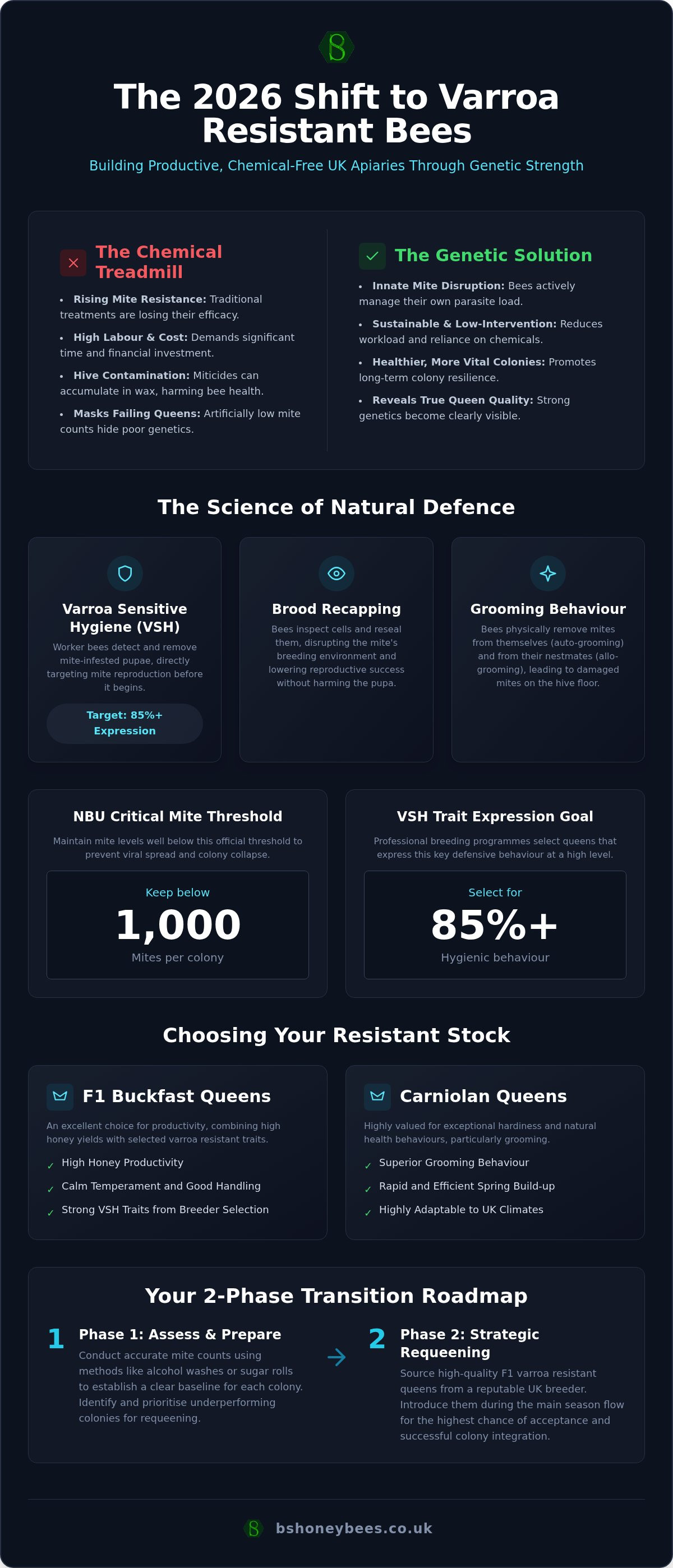
You'll discover the science behind Varroa Sensitive Hygiene (VSH), where leading breeders now select for 85% or higher expression of these resilient traits. We also examine how to maintain mite levels well below the National Bee Unit's critical 1,000-mite threshold without constant intervention. From sourcing F1 Buckfast stock to managing high-health colonies, this guide ensures your beekeeping remains both sustainable and profitable. It's time to move beyond the cost and labour of chemical reliance toward a more resilient future for your bees.
Key Takeaways
- Understand why 2026 marks a shift for UK beekeepers as traditional chemical treatments lose efficacy against evolving mite populations.
- Learn how to leverage natural traits like VSH and brood recapping by introducing varroa resistant queen bees into your apiary.
- Compare the benefits of F1 Buckfast Queens for productivity against Carniolan Queens for their superior grooming behaviour and spring build-up.
- Follow a structured two-phase roadmap to transition your colonies, focusing on accurate mite assessment and strategic requeening timing.
- Optimise your success by using professional-grade BBWear protection and British National hives to manage your high-health stock effectively.
The Evolution of Varroa Resistance in UK Beekeeping
The beekeeping landscape has reached a turning point. For years, the UK industry relied on a cycle of chemical intervention often described as the 'chemical treadmill'. By 2026, the limitations of this system are clear. Mites have developed significant resistance to traditional varroacides, leaving many beekeepers frustrated by rising colony losses despite their best efforts. This has sparked a fundamental shift in strategy. We're no longer just looking to kill mites; we're looking to support the innate biological defences of the honey bee. The National Bee Unit (NBU) has long encouraged selecting from colonies that show natural resistance. This means moving beyond 'tolerance', where a colony merely survives, toward true resistance, where varroa resistant queen bees lead workers that actively disrupt the mite's life cycle.
Modern beekeeping focuses on three primary behavioural traits to manage mite populations naturally:
- Active mite removal through hygienic behaviour.
- Disruption of the mite reproductive cycle via brood recapping.
- Reduction of viral loads, specifically Deformed Wing Virus (DWV), by keeping mite counts below the NBU's critical 1,000-mite threshold.
The Cost of Chemical Dependency
Relying on chemicals is a short-term fix with long-term consequences. Accumulating miticides in hive wax can lead to sub-lethal effects on the colony, including reduced drone fertility and compromised worker health. The labour required for these treatments is also a major burden. Applying multiple rounds of treatments during the narrow windows of autumn and winter is both time-consuming and physically demanding. Beyond the logistical strain, heavy chemical intervention can inadvertently mask signs of a failing queen bee. When you artificially suppress mite levels, it becomes harder to identify queens that lack the genetic strength to maintain a healthy population. A robust colony shouldn't need a chemical crutch to survive.
The 2026 Trend: Breeding for Vitality
In 2026, vitality is the new metric for success. The primary focus for modern breeding programmes is Varroa sensitive hygiene (VSH). This trait allows workers to detect infested pupae and remove them before the mites can reproduce. A 2021 UK study highlighted that resistance is already evolving in dispersed apiaries through behaviours like 'recapping', where bees inspect and reseal brood cells without destroying the pupa. Professional breeders are now selecting for stock that expresses these traits at levels of 85% or higher. For most beekeepers, the most efficient way to introduce these genetics is by sourcing from a reputable F1 buckfast queen breeder. By prioritising genetic health over pure honey volume, you ensure your apiary remains productive whilst significantly reducing your management workload. Varroa resistant queen bees represent the most reliable path to a sustainable, low-intervention future.
The Science of Resistance: VSH, Recapping, and Grooming
Understanding the biology of resistance is essential for any modern apiarist. It's not magic; it's a suite of specific, measurable behaviours. Varroa Sensitive Hygiene (VSH) is the primary genetic mechanism for mite control, involving workers detecting and removing infested pupae before mites can mature. This trait is highly effective because it targets the mite during its reproductive phase, which is exactly where the most damage occurs to the developing bee.
Brood recapping is another critical defence that is often overlooked. Bees uncap a cell to inspect the pupa and then reseal it. This simple act disrupts the humidity and temperature the mite requires to breed successfully. Unlike simple hygienic removal which destroys the brood, recapping preserves the pupa whilst significantly lowering mite reproductive success. Recent research into varroa resistant traits suggests that this disruption is one of the most sustainable ways for a colony to manage its own parasite load over the long term.
Physical grooming also plays a vital role in colony health. Auto-grooming involves a bee removing mites from its own body, whilst allogrooming occurs when nestmates assist each other. High-resistance colonies often show a higher percentage of 'damaged' mites on the floor, featuring missing legs or crushed carapaces. This is often paired with Suppression of Mite Reproduction (SMR), which refers to genetic factors that cause mother mites to remain infertile. This multifaceted approach is what makes varroa resistant queen bees so effective; they don't rely on a single tactic but rather a combination of biological hurdles that the mites cannot easily overcome.
Identifying Resistant Traits in Your Own Hive
Look closely at your brood frames during your weekly inspections. You might notice 'bald brood' patterns or tiny, pin-holed cappings where workers have begun the recapping process. It's vital to differentiate between this healthy hygienic removal and genuine brood diseases. In a resistant hive, the surrounding larvae will appear pearly white and healthy, whereas disease often presents with discolouration or an unpleasant odour. To verify your colony's performance, continue using standard monitoring tools like the 'sugar shake' or 'alcohol wash'. These methods remain the gold standard in 2026 for quantifying your mite load. If your counts stay consistently low without chemical intervention, your stock is performing exactly as intended.
The Heritability of Resistance
Success depends on more than just the queen. Whilst varroa resistant queen bees provide 50% of the genetic blueprint, the drones she mates with provide the rest. This is why drone saturation in your local area is vital. If your queen mates with 'wild' drones lacking these traits, the resistance in the next generation will be diluted. Professional breeders manage this by flooding mating sites with high-quality drones from proven resistant lines. If you want to ensure your apiary is led by these advanced genetics, you should consider starting with mated queens from specialist stock. This ensures the resistance traits are already locked into the colony's workforce from day one.
Comparing Resistant Breeds: Buckfast vs. Carniolan
Selecting the right genetic line is about balancing productivity with survivability. Whilst some argue that only native bees can thrive in the UK, the success of modern varroa resistant queen bees in commercial and hobbyist apiaries tells a different story. The two heavyweights of the industry, Buckfast and Carniolan, offer distinct approaches to mite management. Buckfast lines are specifically bred for high VSH expression, often reaching the 85% threshold required for effective natural control. In contrast, Carniolans rely on intense grooming behaviour and a rapid spring build-up that can outpace the mite's reproductive curve. Both breeds prove that you don't have to sacrifice honey production for health; in fact, a colony that isn't suppressed by viruses will always out-produce a sick one.
Temperament is often a concern when discussing 'wild' or 'resistant' genetics, but professional breeding has solved this. Modern resistant stock is selected for gentleness alongside hygiene. You shouldn't expect defensive behaviour just because your bees are active in removing mites. A calm colony that stays on the comb during inspections is a hallmark of high-quality F1 stock, making the management of these high-performance bees a pleasure rather than a chore.
The F1 Buckfast Advantage
The debate over buckfast vs carniolan bees remains a central topic for UK keepers in 2026. F1 Buckfast colonies are particularly well-suited to the British National hive system, providing a prolific workforce that manages large brood nests efficiently. Because they are F1 hybrids, they benefit from hybrid vigour, which translates to better wintering and improved overall vitality. These bees are the result of rigorous cross-breeding programmes that prioritise the ability to detect and remove infested pupae whilst maintaining the legendary Buckfast forage drive. This combination ensures your apiary stays ahead of the mite population without constant beekeeper intervention.
Which Breed Suits Your Management Style?
Your choice should depend on your local forage and weather patterns. Carniolan bees are often the preferred choice for colder, more exposed UK apiaries. They are the 'economists' of the bee world, able to shut down brood rearing quickly when forage fails, which preserves stores during unpredictable British summers. However, if your goal is maximum honey crops and low swarming tendencies, the Buckfast is the industry standard. Regardless of your preference, the quality of the source is paramount. When buying buckfast queen bees or Carniolans, always ensure you are sourcing from a specialist who records and selects for specific resistance traits. High honey yields are the natural result of a healthy colony, and a healthy colony starts with varroa resistant queen bees.
How to Transition Your Apiary to Varroa-resistant Stock
Transitioning your apiary is a methodical process. You shouldn't expect immediate results by simply dropping a new queen into a collapsing hive. Success requires a four-phase approach that prioritises timing and local genetics. First, assess your current mite levels using the sugar shake or alcohol wash methods discussed earlier. If your counts exceed the National Bee Unit's 1,000-mite threshold, you must treat the colony before introducing new genetics. A high mite load can overwhelm even the best varroa resistant queen bees before they have a chance to establish their own workforce. Once your mite levels are under control, introducing varroa resistant queen bees becomes the foundation of your long-term health strategy.
The Requeening Process
Timing is the most critical factor. Knowing when to requeen a hive uk ensures that you have a large enough window for the new queen to produce several cycles of brood before winter. You must ensure the colony is completely queenless and has no active queen cells before introduction. Using 2 in 1 Poly Nucs is a highly effective way to manage this transition. You can start the new queen in a separate compartment, allowing her to establish a small brood nest before merging her with the main colony. This method significantly increases acceptance rates and provides a backup colony should the main hive struggle during the transition.
Long-term Management Strategy
Don't make the mistake of stopping all treatments immediately. This 'soft landing' approach is essential for colony survival. Monitor your mite drop closely as the new queen's workers take over the hive. As you see evidence of VSH behaviour, such as recapping and lower mite counts, you can gradually reduce the frequency of chemical interventions. Record everything. Identifying which colonies show the best hygienic behaviour allows you to select the best queens for future splits. Ensuring your apiary is saturated with drones from resistant colonies is vital for the long-term success of local mating and maintaining genetic stability across your region.
Ready to upgrade your apiary's genetics? Order your mated queen bees and start your transition today.
Ensuring Success with Premium Bees and Equipment
High-quality genetics require high-quality management. Whilst varroa resistant queen bees do the heavy lifting biologically, your success depends on the environment you provide. Professional-grade BBWear bee suits are essential for the detailed brood inspections required to monitor VSH traits. You need to be able to focus entirely on identifying recapping patterns or bald brood without the distraction of stings. This level of precision is only possible when you have total confidence in your protective gear. Similarly, the British National hive remains the gold standard for modern UK apiary management. Its design allows for the easy expansion and thorough inspections necessary to support prolific, healthy colonies.
Sourcing your stock from a specialist ensures you receive bees with guaranteed health certifications and proven lineage. We prioritise logistical excellence, providing nationwide delivery of live bees to ensure your new queen arrives in peak condition. Integrating resistant genetics is often most successful when starting with high-quality nucleus colonies. Our 5 and 6 frame nucs provide a balanced population of workers already accustomed to their queen's pheromones, which reduces the stress of transition and allows the colony to begin hygienic behaviours immediately.
The BS Honey Bees Quality Standard
We select our F1 Buckfast and Carniolan lines specifically for their performance in varied UK conditions. It isn't enough for a queen to be resistant; she must also be productive and calm-tempered. Our selection process is rigorous, focusing on colonies that maintain low mite counts whilst delivering high honey yields. Beyond the bees themselves, we support your transition with expert advice and a range of premium hardware. From 2 in 1 poly nucs to British National frames, we provide the tools you need to move away from chemical dependency. Our nationwide live bee delivery service is designed with precision, ensuring that every order is handled with the care required for live livestock.
Preparing for the 2026 Season
Forward planning is the hallmark of a successful beekeeper. Demand for resistant stock is high, so we recommend ordering your honey bee nucs for sale UK well in advance of the spring build-up. As you prepare your apiary centre, consider your drone production strategy. Saturating your local area with drones from your best resistant colonies is the most effective way to improve the genetics of the wider local bee population. Use this final checklist to ensure you're ready for a successful, resistant beekeeping year:
- Inspect and clean all British National hives and frames before use.
- Upgrade to BBWear protection for more detailed brood assessments.
- Confirm your 2026 delivery dates for F1 Buckfast or Carniolan queens.
- Establish a clear monitoring schedule using sugar shakes or alcohol washes.
- Prepare your record-keeping system to track hygienic behaviour and mite drops.
Future-Proof Your Apiary with Genetic Resistance
The shift toward genetic resistance is the most significant advancement in modern UK beekeeping. Moving away from the chemical treadmill allows you to foster colonies that thrive independently through traits like VSH and brood recapping. Success in 2026 requires this combination of superior genetics and professional-grade management. Whether you prefer the prolific F1 Buckfast or the resilient Carniolan, the result is a healthier, more productive apiary that requires significantly less intervention.
Introducing varroa resistant queen bees is the most effective way to secure your stock against the challenges of the coming season. As specialist UK breeders of F1 Buckfast and Carniolan stock, we offer the high-health genetics and premium hardware required for a smooth transition. Our nationwide delivery service is trusted by professional and hobbyist beekeepers alike, ensuring your bees arrive in peak condition and ready to perform.
Secure your F1 Buckfast Queens for the 2026 season from BS Honey Bees Ltd. Start your journey toward sustainable beekeeping today; it is the best investment you can make for the future of your bees.
Frequently Asked Questions
Do varroa resistant queen bees require any chemical treatments at all?
No, many beekeepers successfully manage these colonies without any chemical intervention, but we recommend a "soft landing" approach. You should continue to monitor mite levels using the National Bee Unit's 1,000-mite threshold as a guide. If a colony's count exceeds this level during the transition period, a targeted treatment may be necessary to protect the bees whilst the new genetics become established. Over time, the goal is to rely entirely on the bees' natural hygienic behaviour.
How long does it take for a colony to become fully varroa resistant?
It takes approximately six to eight weeks for a colony to express its new genetic traits fully. This is the time required for the existing worker population to be replaced by the offspring of the new queen. You will only see the full benefits of Varroa Sensitive Hygiene (VSH) once the new workers make up the majority of the hive's population. Total stability in mite levels usually occurs after two full brood cycles.
What is the difference between VSH and SMR traits?
VSH stands for Varroa Sensitive Hygiene, which is an active behaviour where workers detect and remove infested pupae. SMR stands for Suppression of Mite Reproduction, which is a genetic trait that causes mites to remain infertile or produce fewer offspring within the brood cell. Whilst VSH is a physical action performed by the bees, SMR is a biological disruption of the mite's life cycle. Most modern resistant stock combines both of these traits for maximum effectiveness.
Can I breed my own varroa resistant queens from a single F1 queen?
You can raise daughter queens, but their resistance will likely be diluted without controlled mating. F1 queens carry the specific resistance alleles, but their offspring (F2) will mate with drones from the surrounding area. If your local environment isn't saturated with resistant drones, the hygienic behaviour in the next generation will decrease. To maintain high levels of resistance, you should regularly introduce fresh F1 genetics or participate in a local drone-flooding programme.
Are Buckfast bees more resistant to varroa than other breeds?
Buckfast bees aren't inherently more resistant, but they are the primary focus of many intensive UK breeding programmes. Breeders select varroa resistant queen bees from Buckfast lines because they successfully balance high VSH expression with legendary productivity and gentleness. Carniolan bees also show excellent resistance through intense grooming behaviour. The key is the specific selection for resistance traits rather than the breed name alone.
Will varroa resistant bees produce less honey due to their hygienic behaviour?
No, resistant colonies often produce higher honey yields because they maintain a healthier, more robust workforce. The energy spent removing a small percentage of infested pupae is far less than the energy lost to viral infections like Deformed Wing Virus (DWV). A colony that isn't suppressed by a high mite load will have more foragers available to collect nectar during the main flow. Health and productivity are directly linked.
Is it safe to introduce a resistant queen into a colony with high mite levels?
It's risky to introduce any queen into a colony that is already suffering from a severe mite infestation. High viral loads and colony stress can lead to the workers rejecting the new queen. You should use a varroacide to bring the mite count well below the 1,000-mite threshold before introduction. This gives the new queen a clean environment to begin laying and ensures her first generation of workers isn't compromised by viruses.
How do I know if my queen is truly expressing varroa resistant genetics?
You can verify the performance of varroa resistant queen bees by looking for specific physical indicators on the brood frames. Look for 'bald brood' patterns where bees have uncapped cells to inspect pupae and 'pin-holed' cappings that indicate the recapping process. Pair these observations with regular alcohol washes or sugar shakes. If your mite counts remain stable or decrease during the peak season without chemical help, your queen's genetics are working effectively.