The hive is only part of the bill. Protective clothing, tools, feed and other essentials all contribute to the cost.
It’s worth knowing where the money goes before you commit. This guide breaks down the main setup and ongoing costs, explains how a swarm or a nuc can affect your budget, and outlines what to include from the start. You’ll have a clearer picture of the investment and what to plan for as you begin beekeeping.
Key Takeaways
- Protective clothing and essential tools form a separate part of your setup budget, so plan for them alongside the hive.
- Your choice of hive and equipment can shift the upfront total; a basic setup and a premium one can differ substantially.
- A nuc gives you an established small colony, while a swarm-based start can lower initial costs but brings different considerations.
- Allow for recurring expenses such as feed, Varroa treatment and replacement frames when planning beyond the first season.
- Starting with one colony keeps the initial commitment lower than beginning with two, while still requiring a full set of essentials.
Bee suit, hive tool, smoker and glove costs
Protective clothing and basic tools are separate costs to factor into your first hive. Together, they can take a noticeable share of your starting budget.
Choose a suit that covers your body and fits comfortably over clothing, since inspections involve bending and reaching. Gloves protect your hands, and a hive tool helps separate frames and lift hive components. A smoker is used during inspections, so include fuel and safe storage in your plans. These are reusable essentials, unlike feed and treatments, which may need replenishing.
Your hive choice also affects the upfront cost. The British National is the most common hive type in the UK. The price depends on the type, material and kit contents. Frames are essential, so check whether they’re included before comparing equipment costs.
That estimate covers more than clothing and tools: equipment and bees make up much of the initial cost. Starting with a swarm may change the upfront budget, as will your hive choice and the components included. Set aside a separate allowance for ongoing care rather than treating the initial purchase as the full cost.
Allow about £50 per hive per year for general maintenance and frame replacement. This covers routine upkeep, not every possible expense. Frames can need replacing as they wear, so inspect their condition during regular hive checks. Annual upkeep also differs from the initial outlay on protective clothing, tools and the hive itself.
Plan your site before the equipment arrives. Choose a site with enough space for the hive and its surroundings. In a UK garden, choose a stable, sheltered position and point the entrance away from busy paths and doors. Consider the bees’ flight path, neighbours and access for inspections. A confined or frequently disturbed spot can make routine work harder, even with the hive and frames ready.
How Much Does It Cost To Start Beekeeping?
The total depends on what your hive kit includes and which items you buy separately. To work out how much it costs to set up a beehive in the UK, budget for the colony, essential equipment and recurring supplies, not just the hive shell.
Essential Beginner Equipment
Essential beginner equipment includes the items needed to house, inspect and care for a colony: a suitable hive, protective clothing, a smoker and fuel, a hive tool, a feeder and bees. Check the kit contents before buying, since you may need to purchase missing components separately.
Feed and Varroa treatment are also early budget items. Feed can supplement a colony’s stores, while Varroa treatment addresses an important hive-health concern. Unlike durable equipment, these supplies are consumables.
Starter Kit Contents and Cost
A starter kit groups some or all of the core equipment into one purchase. Comparing the contents, not just the headline price, helps you see what you’ll still need to buy.
Check whether the package includes the hive parts, frames, feeder, protective clothing and tools you need. This makes it easier to account for anything outside the kit without assuming every component is included.
Extraction Equipment and Extra Supers
Honey extraction equipment removes honey from capped frames, but you don’t necessarily need to buy it straight away. Beekeeping organisations may lend or hire extraction equipment, which can suit beginners processing a small harvest. Whether this works for you depends on access, storage and how much honey you plan to extract.
As a colony grows, it may need extra supers for honey storage. Costs depend on the hive type and whether frames and foundation are included. When working out how much it costs to set up a beehive in the UK, allow for later additions rather than treating the first purchase as a complete long-term setup.
Registration and Local Restrictions
In Scotland, beekeepers currently have no legal requirement to register on BeeBase, according to the Scottish Government. This fact applies to Scotland and doesn’t establish the registration position elsewhere in the UK. Registration and local restrictions are separate considerations.
For a garden hive, consider who controls the land and any conditions on its use. A rented or shared space may have different constraints from a garden you own. Plan the hive’s position, flight path and inspection access before committing to equipment or bees.
Starting with a swarm versus buying a nuc
A swarm and a nucleus colony offer different ways to start keeping bees. A swarm’s cost depends on how you acquire it, while its condition and readiness affect the work needed after collection.
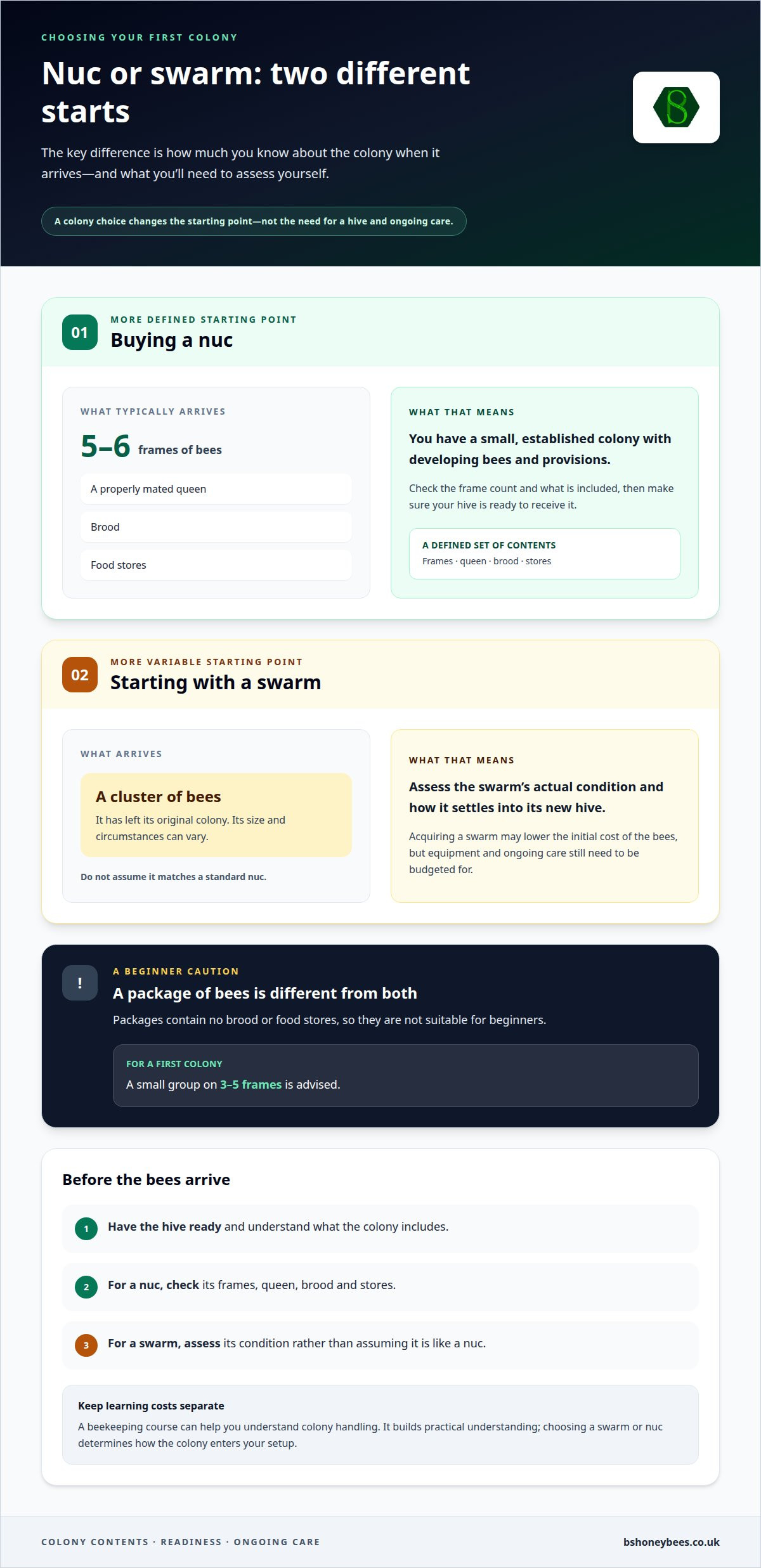
A nuc, short for nucleus colony, is a small, established colony. It typically contains five or six frames of bees, a properly mated queen, brood and food stores. This gives a beginner a defined starting point: the colony already has developing bees and provisions, rather than arriving as bees alone.
A swarm, by contrast, is a cluster of bees that has left its original colony. Its size and circumstances can vary, so you’ll need to assess what you’ve acquired and how it settles into its new hive. A swarm may reduce the initial cost of obtaining bees, but you still need to budget for equipment and ongoing care.
Packages of bees differ from both options. They contain no brood or food stores, so they’re not suitable for beginners. For a first colony, a small group on three to five frames is advised. This offers a manageable starting scale and helps distinguish a package of bees from an established nuc.
Before acquiring either option, have the hive ready and understand what the colony includes. A nuc’s frame count, queen, brood and stores matter because they affect how it fits into the hive and what support it needs. A swarm, by comparison, should be assessed on its actual condition rather than assumed to match a standard nuc.
A beekeeping course can help beginners understand colony handling before they commit to equipment. Keep that cost separate from the cost of bees: a course builds practical understanding, while choosing a swarm or a nuc determines how the colony enters your setup.
When comparing the options, consider the colony’s contents, your experience and the equipment you’ve prepared. A nuc offers a defined set of frames, queen, brood and stores; a swarm’s circumstances can vary. Either way, budget separately for the hive, protective gear, feed and future frame replacements.
Example first-year budgets
First-year totals vary with the number of colonies and the setup you choose. These UK examples show how a swarm-based start, premium equipment or an additional colony can change the overall budget.
This is the leaner example, but it still costs more than simply acquiring bees. The hive, protective equipment and essential tools all contribute to the setup. Your total depends on what you already own, what comes with the hive and whether you need to buy items separately.
The higher budget reflects a larger initial investment in equipment and the colony, not a different annual maintenance figure. The final total depends on the hive, its materials and included components, plus any extra equipment needed to complete the setup.
This isn’t simply the one-colony budget doubled: some equipment can serve both colonies, but each still needs its own hive and bees. Budget separately for the additional hive components and colony, then count shared tools and protective clothing only once.
Use these examples to build a budget around your own starting point. Compare initial purchases with running costs so a lower upfront total doesn’t conceal later spending. List the number of colonies you plan to keep, what the hive package includes and which gear you already own. Then identify what you still need before adding ongoing supplies.
These estimates are planning ranges, not fixed totals for every beginner. The swarm-based example assumes you can obtain a colony without paying the same amount as for a bought nuc, while the premium example allows for a higher-specification setup. Two colonies require a larger initial commitment, even when some equipment is shared. Keep these differences in view when comparing budgets.
Decide whether your first-year budget includes learning and honey processing. A course, association membership or access to extraction equipment can add costs, depending on what you choose and what’s available to you. Separating optional additions from essential hive purchases makes the core setup easier to assess.
Leave some flexibility for replacements and unexpected equipment needs. A setup that looks complete on paper may still need extra frames, foundation or hive components once the colony is established. Budget by category, not just by headline total, to compare a modest swarm start with a premium two-colony plan.
Startup and ongoing cost totals
Separate one-off purchases from recurring expenses to see the full cost of keeping a hive.
Actual spending depends on the supplies you need and the work involved in maintaining the hive.
Treat this as an alternative planning range, not an extra amount to add automatically to every item above. The estimates may overlap, for example, when they include replacement frames. Avoid double-counting by listing feed, treatment and repairs separately, then comparing your total with the broader allowance.
This is a separate budget line from hive upkeep. A course and association membership serve different purposes, so include only the option you plan to use. If you track costs in a spreadsheet, mark recurring expenses in one colour and one-off purchases in another. This makes renewal and replacement costs easier to spot.
Keep your first-year budget separate from later annual totals. The first year includes the hive, equipment and colony, while later costs centre on care and replacing worn items. A one-hive setup and a two-hive apiary won’t cost the same: recurring expenses apply per hive, while some tools can be shared. Record each colony separately to see the difference.
Honey extraction can affect your spending, but buying an extractor isn’t the only option. Beekeeping organisations may lend or hire extraction equipment, which can avoid an immediate purchase, especially if you’re processing honey from one hive. Extra supers and frames are further costs to plan for as the colony’s needs change, rather than fixed annual charges.
Build your estimate in three parts: initial setup, routine yearly care and optional costs such as training or access to extraction equipment. Then calculate per-colony expenses based on the number of hives. This keeps annual treatment and feed visible and prevents a one-off equipment purchase from distorting your ongoing budget.
For help planning the equipment side of your setup, explore beekeeping equipment and match your choices to your hive budget.
BS Honey Bees Ltd
BS Honey Bees Ltd can help you match your first colony and hive equipment to the setup you’ve budgeted for. Its range includes 5 and 6 frame nucs, F1 Buckfast Queens, Carniolan Queens, British National hives and frames, and 2 in 1 Poly Nucs.
If you’re weighing the cost of starting with a nuc against equipment for a particular hive type, consider how each fits your plans. A nuc provides the colony, while your hive and frame choices determine the equipment you need. Choose components that suit your intended setup.
For information about suitable beekeeping options, contact BS Honey Bees Ltd.
Plan your first colony with confidence
To turn a budget into a workable beekeeping plan, decide what you want from your first colony and choose suitable equipment. If you’re weighing how much it costs to set up a beehive in the UK, focus on matching the hive and colony to the care you can provide. A considered choice helps you start with a clear plan.
BS Honey Bees Ltd offers 5 and 6 frame nucs, F1 Buckfast Queens and Carniolan Queens for beekeepers considering their colony options. These choices can help you shape a setup around your starting point, whether you’re selecting an established nuc or considering a queen for your apiary.
Take the next step when you’re ready to turn your plans into a practical choice. Contact BS Honey Bees Ltd for advice about the options that fit your beekeeping plans. A well-planned start gives you a clear foundation for caring for your bees.
Frequently Asked Questions
What equipment will I need?
You’ll need a hive with compatible frames, a colony, protective clothing, a smoker, fuel, a hive tool and a feeder. For example, check that replacement foundation fits your chosen frames before buying it. Plan for cleaning and storage too: dry, organised equipment is easier to manage between inspections. You only need honey extraction equipment when you plan to process a harvest, and it may be borrowed or hired.
What kind of hive should I buy?
The British National is the most common hive type in the UK, making it a familiar option for many beginners. Choose a hive with parts and frames designed for the same type, rather than mixing incompatible components. Material, assembly and included supers also affect your choice. Consider how you’ll move and inspect the hive, since full boxes can be heavy.
How much does a complete beginner beehive setup cost in the UK?
The cost of setting up a beehive in the UK varies with the hive package, protective gear, tools and colony you choose. Treat the range as a first-year planning figure, not just the hive’s price. List your existing equipment separately to avoid budgeting twice for reusable items.
What is the UK price of a National beehive and a hive stand?
That figure is for the kit, not necessarily a hive stand or every item needed for a working apiary. Stand costs vary by material and design, and the stand must support the hive securely at your chosen site. Include frames, supers and any excluded components when comparing hive prices.
What essential beekeeping tools and protective clothing are needed, and how much do they cost?
Core items include a bee suit, gloves, hive tool and smoker. These are general UK market figures, not prices for a particular seller’s products. Choose gloves that let you handle frames securely, and store the smoker safely between inspections.
Is beekeeping equipment cheaper to buy as a starter kit or separately in the UK?
A starter kit can be convenient when its contents suit your setup, but it isn’t automatically the cheapest option. Compare the included hive parts, frames and tools with what you’d buy individually. For example, a kit may exclude protective clothing or a feeder, while separate purchases can help you avoid duplicates. Your existing equipment and the kit’s exact contents determine which approach offers better value.
What are the main risks and unexpected costs of starting beekeeping in the UK?
Allow for costs beyond the initial hive, including feed, Varroa treatment, replacement frames and small equipment additions. As a colony develops, it may need extra space, making additional supers necessary. Access to extraction equipment is another cost to consider when you’re ready to process honey.