Your beehive is the most critical piece of infrastructure you'll ever buy for your apiary; it's a precision management tool, not just a wooden box. Choosing the wrong setup leads to years of frustration, frame compatibility issues, and equipment that fails in the face of a damp British winter. When you look to buy beehive UK kits, you need a system that protects your investment and your bees while remaining easy to handle during weekly inspections.
It's natural to feel hesitant when faced with the choice between Western Red Cedar and polystyrene, or when trying to distinguish between a brood chamber and a honey super. You want a durable, standard-compliant setup that guarantees successful colony establishment. This 2026 guide provides the clarity you need to move forward with total confidence. We'll master the essentials of sourcing and assembling the perfect British National hive, ensuring every component fits perfectly from day one.
We'll examine the pros and cons of different materials, explain the British Standard 1300 specifications, and provide a clear checklist for your first complete setup. By the end of this guide, you'll have a professional, highly organised apiary ready for a productive season.
Key Takeaways
- Understand why the British National hive is the definitive standard for UK beekeepers, ensuring complete component interchangeability across your entire apiary.
- Compare the traditional durability of Western Red Cedar against the superior thermal performance and lighter weight of modern high-density polystyrene hives.
- Master the assembly process by using the correct tools and square joints to create a weather-tight, professional-grade home for your colony.
- Learn why you should buy beehive UK hardware and live bees from the same specialist to ensure perfect compatibility and a successful 2026 start.
- Identify the essential accessories, such as queen excluders and smokers, needed to manage your bees safely and maximise your honey production.
Understanding the British National Hive Standard
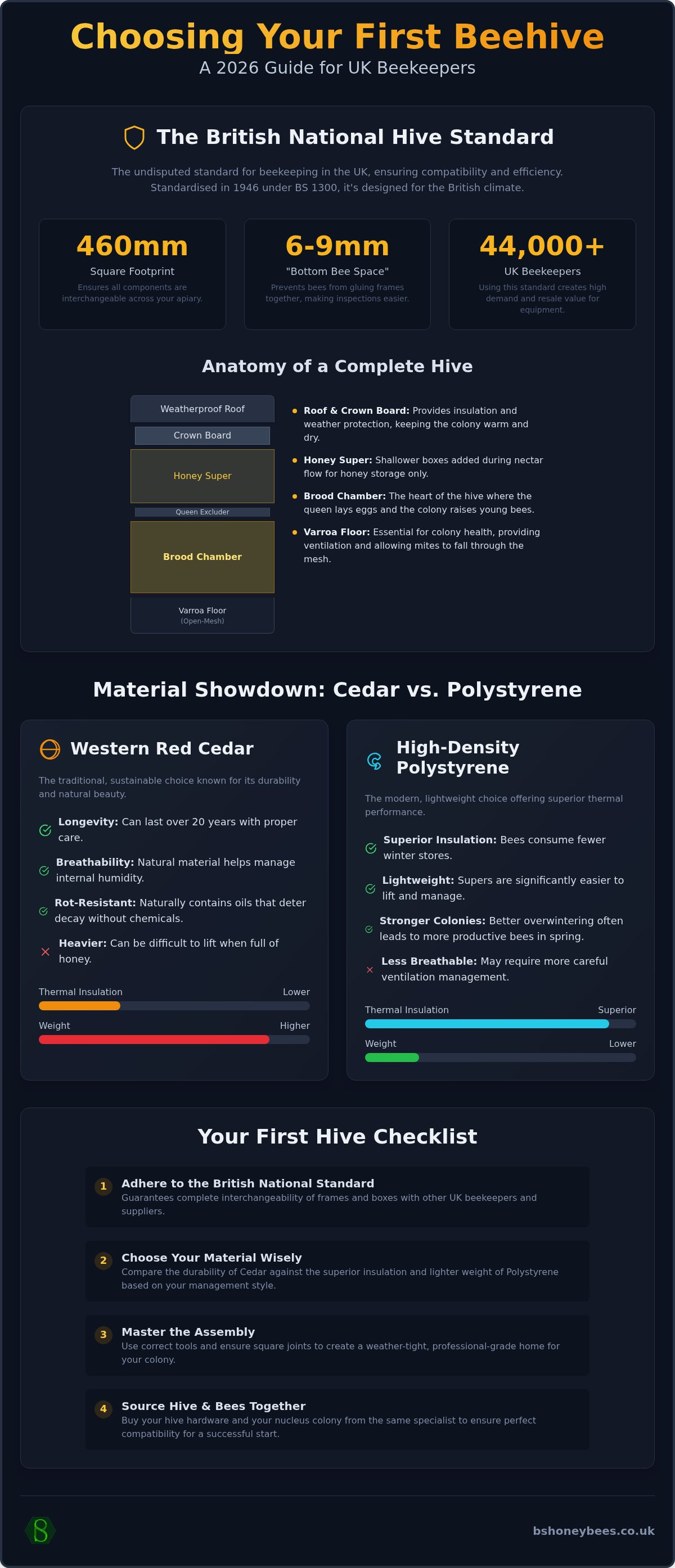
The British National hive is the undisputed standard for Beekeeping in the United Kingdom. First standardised in 1946 under BS 1300, its square 460mm footprint has become the blueprint for successful apiary management across the country. When you decide to buy beehive UK equipment, selecting the National standard ensures that your components remain compatible with almost every other beekeeper in your local association. This design is specifically engineered to handle the damp, unpredictable British climate whilst providing enough volume for a prolific queen to thrive.
One technical detail you must master is "bee space." Most British National hives utilise a "bottom bee space" configuration. This means the 6mm to 9mm gap required for bees to move without building excess wax or propolis is located at the bottom of each box. Maintaining this precision is vital. If your equipment doesn't respect these tolerances, your bees will glue the frames together, making inspections difficult and stressful for the colony.
The Anatomy of a Complete Beehive
A functional hive is a vertical stack of specialised components. At the base, the Varroa floor is essential for modern colony health. Its open-mesh design allows mites to fall through while providing vital ventilation during humid months. Above this sits the brood chamber, the heart of the hive where the queen lays her eggs. During the nectar flow, you'll add honey supers, which are shallower boxes designed for honey storage.
The stack is topped with a crown board and a weatherproof roof. A gabled or flat roof made from Western Red Cedar or high-density polystyrene provides the necessary insulation to keep the cluster warm during winter. Every piece of the stack must fit perfectly to prevent draughts and discourage robbing by wasps or other bees.
Why Standardisation Matters for UK Beekeepers
Standardisation isn't about lack of choice; it's about logistical efficiency. Using the National standard makes it simple to find national hive frames for sale that fit your boxes exactly, regardless of where you purchased them. If you ever need to buy a nucleus colony (nuc) to start or expand your apiary, most UK breeders supply them on National-sized frames. This allows for a seamless transfer into your full-sized hive without the need for adapters or messy modifications. It also protects the resale value of your hardware, as the demand to buy beehive UK kits in the National format remains consistently high amongst the 44,000 amateur beekeepers currently active in the country.
Western Red Cedar vs Poly Hives: Which Should You Buy?
When you prepare to buy beehive UK equipment, the material you choose dictates your management style for the next decade. The debate between traditional Western Red Cedar and modern high-density polystyrene (poly) isn't just about aesthetics; it's about thermal efficiency and physical durability. British winters are notoriously damp and unpredictable, making your choice of hive material a critical factor in colony survival rates.
Timber remains the classic choice for its natural breathability and longevity. Conversely, poly hives offer insulation properties that wood simply cannot match. The National Bee Unit emphasises the importance of hive health and hygiene, and both materials require different maintenance routines to keep your bees safe and disease-free. Your decision should balance the initial cost against the long-term benefits to your bees' overwintering success.
The Case for Traditional Timber
Western Red Cedar is the gold standard for wooden hives in the UK. It's naturally rot-resistant due to high concentrations of organic oils, meaning it doesn't require chemical preservatives that could harm your colony. Wood allows for a degree of moisture exchange, helping to manage the internal humidity that often plagues hives in the wet British climate. Whilst timber is heavier than poly, a well-maintained cedar hive can last over 20 years. It's a sustainable, environmentally friendly option that many beekeepers prefer for its traditional look and proven track record.
The Advantages of High-Density Poly
Modern high-density polystyrene hives have revolutionised beekeeping by providing superior R-values. This extra insulation means the bees consume fewer winter stores to stay warm, often leading to stronger colonies in the spring. Poly supers are significantly lighter than their wooden counterparts, which is a major benefit during the honey harvest when boxes are full. If you're looking to expand your apiary quickly, using a 2 in 1 poly nuc is an excellent way to nurture small colonies before they move into full-sized hives. Poly equipment must be painted with masonry paint to protect it from UV degradation, but it remains a cost-effective and high-performance alternative to timber.
Whether you value the heritage of cedar or the efficiency of poly, ensure your equipment meets the British National standard for total compatibility. You can explore our full range of British National Hives & Frames to find the perfect match for your management style. Choosing the right material now saves you from the frustration of mismatched equipment later.
How to Assemble Your New Beehive: A Step-by-Step Guide
Most beekeepers choose to buy beehive UK kits in flat-pack form to save on initial costs and shipping fees. Assembling your own hardware is a rewarding process that ensures you understand every component of your colony's home. Before you begin, clear a large, flat workspace and gather your essential tools: a small cross-pein hammer, waterproof wood glue (D3 or D4 grade), and a try square. Most kits include the necessary galvanised or stainless steel nails, but having a few spares is always a sensible precaution.
Start with the brood box or supers. These typically use simple square joints or finger joints. Apply a thin layer of glue to the contact surfaces before sliding the pieces together. Use your try square to ensure the box is perfectly square before the glue sets; a skewed box will cause issues with frame alignment and weatherproofing later. Once square, drive the nails in at a slight angle, a technique known as dovetail nailing, to provide extra mechanical strength against the weight of honey and bees.
Frame Assembly and Foundation Fitting
Frames require precision to maintain the correct internal environment. For most UK hobbyists, using wired wax foundation is the best choice as it provides the structural integrity needed for honey extraction. When nailing the side bars to the top bar, use a small amount of glue and be careful not to split the timber. Bee space is the precise 6mm to 9mm gap maintained between frames and hive walls that allows bees to move freely without building excess comb or propolis. Ensuring your frames sit level on the metal or plastic runners is vital for maintaining this space across the entire stack.
Painting and Protecting Your Hive
If you've opted for a timber hive, you must decide on a finish. Western Red Cedar can be left to silver naturally, but many choose to apply a bee-safe wood stain or paint to prolong its life. For polystyrene hives, painting is mandatory to protect the material from UV damage. Use high-quality, water-based masonry paint or low-VOC exterior wood paint. The British Beekeepers Association suggests using muted, natural colours like greens, greys, or creams, which help the hive blend into the environment whilst providing enough contrast for bee orientation. Never paint the interior of the hive; the bees will naturally coat the inside with propolis to create their own sterile environment.
Once assembled and dry, place your hive on a sturdy stand. Ensure it's level side-to-side, but consider a very slight forward tilt to allow any driven rain to drain out of the entrance rather than pooling on the floor. This attention to detail during assembly sets the stage for a healthy, productive apiary.
Essential Accessories to Buy with Your Hive
Buying the box is only the first step in establishing a productive apiary. To manage a colony successfully, you need a specific kit of accessories designed for the British National standard. When you look to buy beehive UK hardware, don't overlook the technical tools that make inspections safe and efficient. A smoker is your primary tool for communication; it masks alarm pheromones and keeps the colony calm during thorough hive checks. Similarly, queen excluders are essential for clean honey production. Wire excluders are the professional choice as they have rounded edges that protect delicate bee wings and allow easier passage, whereas plastic versions offer a lightweight, cost-effective alternative for those starting with a single colony.
Nutrition management is a critical factor in the unpredictable UK climate. You must have feeders ready for both spring and autumn support to prevent starvation during a "June gap" or a long winter. Rapid feeders, which sit on top of the crown board, allow a colony to take down large volumes of syrup quickly before the cold sets in. Contact feeders are ideal for smaller colonies or early-season stimulation where a slower intake is preferred. Having these on hand ensures you can react immediately to changing weather patterns without waiting for a delivery.
Choosing the Right Hive Tool
Your hive tool is a vital extension of your hand. The choice usually falls between the traditional standard tool and the J-type. The J-type is superior for lifting frames, providing mechanical leverage that minimises vibration and stress on the bees during removal. Always choose high-grade stainless steel. It resists rust and allows for thorough scorching or chemical sterilisation between apiaries, which is vital for disease prevention. Use the flat edge to scrape away propolis gently, taking care not to gouge the wood or poly joints of your new hive.
Safety Gear for the Apiary
Confidence in the apiary starts with high-quality protection. Many UK professionals choose BBWear bee suits because they offer the perfect balance of ventilation and sting resistance. A fencing-style veil provides the best visibility and keeps the mesh away from your face, even in windy conditions. For your hands, leather gloves offer maximum protection, but many experienced keepers prefer thick nitrile gloves to maintain better dexterity and hygiene. Regularly wash your suit to remove alarm pheromones that can trigger defensive behaviour in subsequent inspections.
Ensure your apiary is fully equipped by choosing from our selection of British National Hives & Frames and professional accessories to complete your setup before the season begins.
Sourcing Quality Hives and Bees for the 2026 Season
Success in the apiary depends on the synergy between your hardware and your colony. When you choose to buy beehive UK kits, sourcing your bees from the same specialist eliminates the risk of frame incompatibility or poor fit. We ensure that our British National hives and frames are perfectly matched to the 5 and 6-frame nucleus colonies we produce. This integrated approach means that when your bees arrive, they can be transferred into their new home in minutes, reducing stress for the colony and the keeper alike. Investing in a system designed to work together from day one protects both your budget and your livestock.
Our commitment to quality extends beyond the hardware. We provide nationwide delivery for both live bees and heavy equipment, ensuring every component reaches your site safely. This logistical precision is backed by expert aftercare from the BS Honey Bees Ltd team, providing you with a reliable partner as you establish your apiary. We don't just sell boxes; we provide the foundation for a thriving beekeeping enterprise.
Matching Hive Capacity to Bee Temperament
Buckfast bees are renowned for their prolific nature and calm temperament, making them the ideal choice for both hobbyists and commercial keepers. Because an F1 Buckfast queens UK strain is bred for high productivity, they require a well-managed brood chamber to reach their full potential. A standard National brood box provides the necessary volume, but you must be proactive in managing space to prevent swarming during the peak nectar flow. The role of mated queen bees UK breeders provide is to ensure that the genetic line is stable and high-performing. If the colony expands rapidly during the spring build-up, add your supers immediately to provide the necessary room for honey storage and brood expansion.
Ordering for the 2026 Spring Build-up
The 2026 season is already showing high demand. Many UK suppliers report that nucleus colonies are selling out months in advance, so secure your hardware and bees early to avoid disappointment. This allows you to have your site prepared and your hives assembled well before the live bees arrive. We organise nationwide distribution using specialised methods to ensure live colonies and heavy hardware reach you in peak condition. Preparing your apiary site with sturdy stands and clear flight paths is essential before your nucs arrive. By coordinating your hardware purchase with your bee order when you buy beehive UK equipment, you create a seamless transition that sets your apiary up for professional-grade results.
Ready Your Apiary for the 2026 Season
Establishing a successful apiary requires more than just a box; it's about building a system that supports your bees through the unique challenges of the British climate. By adhering to the British National standard, you ensure that your equipment remains versatile and compatible with local nucleus colonies. Whether you choose the traditional longevity of Western Red Cedar or the thermal efficiency of high-density polystyrene, your investment is the foundation of your colony's health.
When you prepare to buy beehive UK hardware, remember that quality and standardisation are your best defences against future frustration. As specialists in F1 Buckfast and Carniolan breeding and official stockists of professional BBWear suits, BS Honey Bees Ltd provides the high-level expertise you need. We offer nationwide delivery across the UK to ensure your hardware and live bees arrive safely and on schedule.
Browse our range of British National Hives and Beekeeping Equipment to secure your setup today. Your journey into beekeeping is a rewarding commitment, and with the right tools in place, you're set for a productive and enjoyable 2026 season.
Frequently Asked Questions
What is the best time of year to buy a beehive in the UK?
The best time to buy is during the autumn or winter months. This gives you ample time to assemble, glue, and paint your hardware before the spring build-up begins in April. Purchasing early avoids the seasonal rush and ensures your apiary is fully prepared before your live bees arrive. It's the most organised way to buy beehive UK equipment without the pressure of a looming nectar flow.
Does a British National hive come with bees included?
No, a standard hive is sold as hardware only. You're purchasing the wooden or poly components, frames, and foundation sheets. Live bees, such as a nucleus colony or a mated queen, must be ordered separately. We recommend coordinating your hardware purchase with your bee order to ensure that your frames are perfectly compatible with the nuc you receive from your specialist breeder.
How much does a complete beehive setup cost in 2026?
The cost of a complete setup depends on the materials you select and the number of components included. A standard kit typically features a floor, brood chamber, two supers, and a roof. You should also account for the cost of frames, wax foundation, and protective clothing like a professional bee suit. When you buy beehive UK hardware, investing in durable materials like Western Red Cedar often proves more cost-effective over a decade of use.
Can I mix wooden and poly hive parts in one stack?
You can certainly mix materials as long as both parts adhere to the British National standard. Because the external dimensions of 460mm x 460mm are standardised, a poly super will sit perfectly on a wooden brood box. This flexibility allows you to trial different materials or transition your apiary from timber to poly over several seasons without making your existing hardware redundant.
Is Western Red Cedar better than Deal for a beehive?
Western Red Cedar is significantly better than Deal for long-term beekeeping. Cedar contains natural oils that make it rot-resistant and dimensionally stable, meaning it won't warp or shrink in the damp British climate. Deal, which is essentially pine, requires aggressive chemical treatment to survive outdoors and is much more prone to movement. Cedar's longevity makes it the superior choice for a professional apiary.
How many supers do I need for my first year of beekeeping?
You should have at least two supers ready for your first year. While a new colony might only fill one super in its first season, a strong nectar flow can happen quickly. Having a second super assembled and ready to go prevents the bees from becoming congested, which is a primary trigger for swarming. It's always better to have spare capacity in the shed than to scramble for equipment mid-flow.
What is the difference between a 14x12 and a standard National brood box?
The difference lies in the depth of the brood box. A standard National brood box is 225mm deep, while a 14x12 box is 315mm deep to accommodate larger frames. This "deep" format provides more space for the queen to lay, which is often necessary for prolific strains like Buckfast. It eliminates the need for a "brood and a half" setup, making inspections more straightforward and less disruptive.
Do I need a stand for my beehive or can it sit on the ground?
You must use a stand rather than placing the hive directly on the ground. A stand improves ventilation through the open-mesh floor and protects the timber or poly from ground moisture and rot. It also raises the hive to a comfortable working height, reducing strain on your back during inspections. A sturdy stand also helps deter pests like mice and keeps the entrance clear of growing grass.