A drone-laying queen isn't just a minor setback; it's a ticking clock for your colony's survival. Opening your British National hive to find a sea of bullet-shaped drone cappings where healthy worker brood should be is a scenario every beekeeper dreads. You've invested significant effort into your bees, and it's natural to feel anxious when the colony's future hangs in the balance. By accurately identifying the drone laying queen symptoms uk apiaries encounter, you can intervene before the worker population crashes and the hive becomes unsalvageable.
The good news is that a drone layer is a management opportunity to upgrade your colony's genetics. This professional guide will walk you through the diagnostic process to help you distinguish between a failing queen and laying workers. We provide a clear, step-by-step method for a successful queen introduction, ensuring you have the confidence to replace a failing monarch with a high-quality mated queen. We'll show you how to restore a healthy worker brood cycle and get your bees back on track for a productive 2026 season.
Key Takeaways
- Identify drone laying queen symptoms uk apiaries encounter, specifically domed "bullet" cappings in worker cells and scattered brood patterns.
- Differentiate between a failing queen and laying workers by inspecting egg positioning and confirming the monarch's presence.
- Execute a professional de-queening and brood management process to prepare your British National hive for a new introduction.
- Select high-quality F1 Buckfast or Carniolan queens to ensure rapid colony buildup and superior temperament in the 2026 season.
- Monitor the 14-day recovery window to verify the new queen's performance and manage the temporary population gap effectively.
Recognising Drone Laying Queen Symptoms in Your Hive
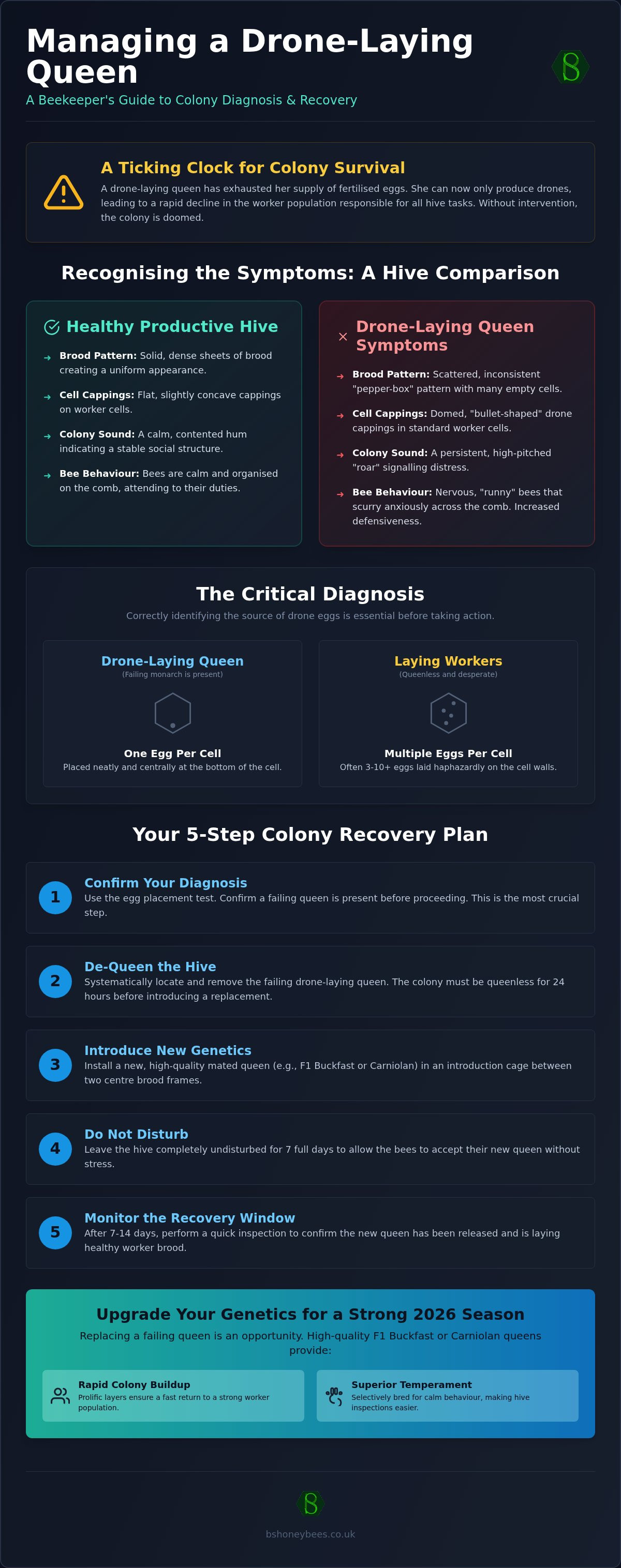
Identifying drone laying queen symptoms uk beekeepers encounter requires a methodical approach during regular inspections of your British National hives. A healthy colony relies on the queen’s ability to produce a consistent stream of worker bees to maintain the hive's social structure. When she fails, the demographic shifts toward drones, which cannot forage or nurse. A drone-laying queen is defined as a female that has exhausted her spermatheca or was poorly mated, leaving her capable of only laying unfertilised eggs.
Visual Markers on the Brood Frames
The most immediate sign of a problem is the presence of "bullet-shaped" domed cappings in worker-sized cells. In a healthy colony, drone brood is typically confined to larger cells at the frame's periphery or in specific drone comb. When you see raised, protruding cappings in the centre of the brood nest where flat worker brood should be, the queen is failing. You will also notice a distinct lack of pearly white worker larvae in the heart of the nest.
Observe the overall layout of the frames. Instead of the solid, healthy slabs of brood characteristic of a high-quality queen, you'll see a scattered "pepper-box" pattern. This disjointed appearance occurs because the worker bees often attempt to clear out the inappropriate brood. Whilst inspecting the eggs, look closely at their placement. A drone-laying queen usually places a single egg centrally at the bottom of the cell, which is a key factor in distinguishing from laying workers who often deposit multiple eggs haphazardly against the cell walls.
Colony Behavioural Changes
Your bees often signal distress before you even lift a frame. A colony with a failing queen frequently exhibits a sharp "roar"-a persistent, higher-pitched buzzing that differs from the contented hum of a stable hive. You may also notice the bees becoming "runny" on the comb, scurrying nervously rather than calmly attending to their duties. This lack of cohesion is often accompanied by increased defensiveness, making a professional BBWear bee suit essential for these inspections.
In a desperate attempt to save themselves, the colony might start building emergency queen cells. However, because the queen is only laying unfertilised eggs, these cells are built around drone larvae. This is known as a "hopeless" state; these cells will never produce a viable queen. Don't let the sight of the queen herself reassure you. Queen presence does not equal queen effectiveness. If the symptoms above persist, the colony's survival depends on your immediate intervention to replace her with proven genetics.
Drone Layer vs Laying Workers: Making an Accurate Diagnosis
Accurate diagnosis is the line between saving a colony and wasting a perfectly good queen. Whilst the visual result of drone brood in worker cells is a constant, the source of those eggs dictates your entire recovery strategy. Misidentifying drone laying queen symptoms uk beekeepers face can lead to expensive mistakes. If you introduce a new queen to a hive that already has a failing queen present, the workers will likely kill the newcomer. Conversely, treating a queenless hive with laying workers as if it simply has a failing queen will result in the same failure. You must be certain of what is happening inside the brood nest before you act.
The Egg Placement Test
Grab a magnifying glass and head to the centre of the brood nest. A drone-laying queen still possesses the biological instinct and physical length to place her eggs correctly. You will find a single egg, neatly centred at the very bottom of the cell. Because she has a long abdomen, she can reach the base with precision. Laying workers lack this physical reach. Their shorter abdomens mean they often glue eggs to the sides of the cell walls. Furthermore, laying workers are chaotic; you'll frequently see three, four, or even ten eggs shoved into a single cell. If you find the queen amongst the bees, even if she looks healthy, her presence confirms she is the drone layer and must be removed.
Assessing the Pheromone Level
The social order of the hive is maintained by Queen Mandibular Pheromone (QMP). This "chemical glue" suppresses the ovaries of worker bees. A drone-laying queen, despite her inability to produce fertilised eggs, still produces enough QMP to signal her presence to the colony. This is why you rarely see laying workers develop whilst a failing queen is still in the hive. However, there is a narrow window of opportunity. Once her pheromone levels drop or she dies, the hive can quickly spiral into a laying worker state, which is significantly harder to fix.
Following the National Bee Unit's guide to requeening is the best way to ensure you're following biosecurity and best-practice standards. Once you've confirmed the presence of a failing queen, the priority is to source a high-quality replacement from a reputable UK queen breeder to restore the hive's productivity. If you choose the "shaking out" method without first finding and removing the failing queen, she will simply fly back into the hive with the workers, and your problem will persist. Diagnosis is the prerequisite for a cure.
Step-by-Step Guide: How to Requeen a Hive Successfully
Once you have identified the drone laying queen symptoms uk beekeepers commonly face, you must act with precision. A colony that has been failing for weeks is often stressed and defensive. Success depends on a methodical transition from the old, failing queen to a productive new one. Follow this professional sequence to secure your hive's future.
- Step 1: De-queen the hive. You must find and remove the failing queen. If she remains, the workers will reject any new queen you attempt to introduce.
- Step 2: Prepare the brood nest. Remove frames heavily laden with domed drone brood. These take up valuable space that your new queen needs for worker eggs. Replace them with clean, drawn comb if available.
- Step 3: Introduce the new queen. Place the queen cage, with the candy plug exposed, into the heart of the hive.
- Step 4: Observe the 7-day rule. Do not open the hive for at least one full week. Disturbing the bees during the introduction phase often leads to them "balling" and killing the new queen out of panic.
Preparing the Colony for Acceptance
Timing is everything. After removing the drone layer, wait twenty-four hours before introducing the new cage. This ensures the colony is "hopelessly queenless" and more receptive to a new pheromone source. Using high-quality mated queen bees UK breeders provide ensures your new monarch is ready to lay immediately upon release. If you are requeening during a nectar dearth, provide a light 1:1 sugar syrup feed. A well-fed colony is always more welcoming to a new queen than a hungry, defensive one.
The Introduction Process
Position the queen cage between two frames containing emerging brood. This ensures that the first bees the queen meets are young, non-aggressive nurses. Before you close the hive, observe the bees' behaviour on the cage. If they are frantically biting the mesh, they are still aggressive. If they are sticking their tongues through to feed her, they have accepted her. Never manually release the queen. Let the workers chew through the candy plug at their own pace; this slow release is vital for pheromone stabilisation. Trust the process and wait for the bees to complete the introduction naturally.
Choosing Your Replacement: F1 Buckfast or Carniolan Queens?
Finding the right successor is the final step in resolving the drone laying queen symptoms uk has forced upon your apiary. A failing queen often leaves a colony stressed, defensive, and numerically weakened. To reverse this, you must introduce genetics that prioritise productivity and temperament. Professional beekeepers in the UK typically choose between F1 Buckfast and Carniolan queens, both of which offer distinct advantages for the British climate.
The Buckfast Advantage for UK Beekeepers
F1 Buckfast queens UK are renowned for their prolific laying ability and exceptionally low swarming tendency. These traits are vital when you need to rebuild a worker population quickly after a drone-layer crash. F1 refers to the first generation from breeder stock, ensuring peak hybrid vigour and consistent performance. When deciding between buckfast vs carniolan bees, consider your local forage; Buckfasts excel in areas with steady, long-term flows.
Carniolan queens offer a different strategy. They are favoured for their explosive spring buildup and remarkable overwintering thriftiness. They respond quickly to the first signs of nectar, which is ideal for the unpredictable UK spring. Regardless of the breed, gentle genetics are essential. A hive that has been "queen-right" but failing often becomes aggressive; introducing a calm F1 queen is the most effective way to restore a manageable temperament to the colony.
Sourcing Your New Queen
Sourcing your queen from a specialist breeder ensures she is well-mated and pheromone-strong. This strength is crucial for suppressing any potential laying workers that might develop during the transition. When you order mated queens from a professional supplier, expect nationwide delivery via secure, tracked services. Most queens arrive in a protective cage with attendant workers and a candy plug. This professional logistics chain ensures the queen arrives in peak condition for immediate introduction.
Upon arrival, handle the cage with care. Keep the queen in a dark, room-temperature environment away from direct sunlight or draughts. You can provide a tiny drop of water on the mesh if there is a delay before introduction, but aim to get her into the hive as soon as the 24-hour de-queening period has passed. High-quality stock is the foundation of a resilient apiary. Investing in proven genetics now prevents the recurrence of failing queens later in the 2026 season.
Ensuring Colony Recovery After Requeening
Successfully introducing a new queen is only half the battle. Because the drone laying queen symptoms uk apiaries experience often persist for several brood cycles before intervention, your colony will face a significant population gap. There are no new workers emerging to replace the dying foragers. You must monitor this recovery phase with logistical precision to ensure the hive remains viable for the remainder of the 2026 season. A hive that appears stable today may still collapse in three weeks if the demographic shift is too severe.
The First Inspection Post-Introduction
Resist the urge to disturb the hive until at least 14 days have passed since the queen's release. During this inspection, your primary goal is to verify a healthy worker brood pattern. Look for pearly white larvae and flat, biscuit-coloured cappings in the centre of the frames. If you find eggs and young larvae, the queen is "in lay" and the introduction is a success. Check for the calmness of the bees as a sign of queen acceptance; a queen-right colony will be focused on the comb rather than flying at your veil.
Occasionally, a stressed colony may attempt to build supersedure cells even after a successful introduction. This happens because the bees are still reacting to the previous lack of pheromone. Carefully remove these cells to give the new queen time to establish her dominance. If the colony remains defensive or "runny" on the frames after two weeks, it may indicate that the queen has not been fully accepted or is failing to produce sufficient pheromone.
Boosting the Hive for Winter
If the worker population has crashed significantly, the colony may struggle to generate enough heat for the winter. You can support a weak hive by adding a frame of capped worker brood (without bees) from a strong donor colony. This provides an immediate "injection" of young workers to assist the new queen. If the colony is too far gone to recover independently, consider using honey bee nucs for sale UK as a fallback to combine with your existing bees or to restart the hive entirely.
As you approach the autumn, prioritise feeding strategies to ensure the new queen’s first winter is a success. Provide heavy sugar syrup to help the bees build up stores in their British National hive. Simultaneously, maintain a rigorous Varroa management programme. A recovering colony is highly susceptible to viral loads carried by mites; keeping the infestation low is vital for the survival of the "winter bees" that will carry the hive through to next spring.
Securing Your Hive’s Future for the 2026 Season
Don't let a failing queen jeopardise your apiary's success. Identifying drone laying queen symptoms uk beekeepers face is the first step toward restoring a thriving colony. By distinguishing between a drone layer and laying workers, you ensure the right treatment is applied at the right time. Replacing a failing monarch with high-quality F1 genetics doesn't just save the hive; it improves the temperament and productivity of your entire apiary for the long term.
Whether you prefer the prolific nature of Buckfasts or the explosive spring growth of Carniolans, sourcing from a specialist UK breeder guarantees you receive a well-mated, pheromone-strong queen. We provide nationwide delivery of mated queens and supply everything from British National hives to professional-grade BBWear suits. Act swiftly to manage the population gap and provide the necessary autumn support to see your bees safely through the winter.
Order your F1 Buckfast or Carniolan replacement queen today and restore your colony to its full potential. Your bees are resilient. With the right intervention and superior stock, your hive will be back to full strength before the season ends.
Frequently Asked Questions
How can I tell if I have a drone laying queen or laying workers?
Look closely at the egg placement within the cells. A drone-laying queen deposits single, centred eggs at the base of the cell; laying workers leave multiple, haphazard eggs on the cell walls. Finding the queen herself confirms she is the source of the problem. Identifying these drone laying queen symptoms uk beekeepers encounter is the only way to select the correct management strategy.
Is it worth trying to save a hive with a drone laying queen?
Yes, provided the worker population has not completely collapsed. If the colony still has enough foragers and nurse bees to support a new queen's first brood cycle, requeening is highly effective. If the hive is severely depleted, you might need to add frames of capped worker brood from another hive. This bridges the population gap whilst the new queen establishes her own brood nest.
Can a drone laying queen ever be fixed or cured?
No, a drone-laying queen cannot be cured. Once a queen has exhausted her supply of stored sperm or was improperly mated, she is biologically incapable of producing fertilised worker eggs. Attempting to "wait it out" only leads to colony collapse. Your only professional option is to remove her and introduce a high-quality mated queen to restore the hive's social structure and productivity.
How long does a colony have before it becomes laying workers?
A colony typically has about 10 to 14 days after the total loss of queen pheromones before worker ovaries begin to develop. Whilst a drone-laying queen is present, her pheromones usually suppress this transition. However, once she is removed or her health fails entirely, you must act quickly. Introduce a new queen within 24 to 48 hours of de-queening to maintain order.
Should I kill a drone laying queen before introducing a new one?
Yes, you must remove and dispatch the failing queen before attempting an introduction. Bees will almost always reject and kill a new queen if their old one is still present, regardless of her poor performance. Locate the drone layer, remove her from the hive, and wait 24 hours. This ensures the colony feels "hopelessly queenless" before you place the new queen cage between the frames.
What is the best time of year to requeen a failing hive in the UK?
The best time is during the main active season, typically from May to August, when mated queens are readily available. In the UK, weather-dependent dispatch usually begins in April. Requeening during a nectar flow improves acceptance rates significantly. If you must requeen later in the season, ensure you provide supplemental syrup to help the colony establish the new queen before winter arrives.
Will the bees accept a new queen if there is still drone brood present?
Yes, bees will accept a new queen despite the presence of drone brood, provided the old queen has been removed. However, you should remove as much drone brood as possible to make space for the new queen's worker eggs. This reduces the resource drain on the hive. It also allows the new worker population to build up more rapidly, which is essential for colony survival.
How do I stop my new queen from becoming a drone layer?
You cannot entirely prevent it, but you can minimise the risk by sourcing professionally mated F1 queens from reputable breeders. These queens are bred under controlled conditions to ensure they receive a full complement of sperm. Avoid relying on emergency queen cells in poor weather. Drones may be scarce or mating flights might be cut short, leading to poorly mated queens and drone laying queen symptoms uk apiaries see.