The lightest bee suit isn’t automatically the best choice for a hot inspection. The best bee suit for hot weather uk beekeepers choose should balance practical coverage, a comfortable fit and useful product details about ventilation.
If you’ve sweated through a hive check, you’ll know how quickly heat and discomfort can make apiary work harder. Choosing a cooler-feeling suit shouldn’t mean guessing about protection. This guide explains how to compare fabric, ventilation, fit and coverage, and what to check in a product description before buying.
We’ll also point to BBWear bee suits sold by BS Honey Bees Ltd, without assuming specifications that aren’t confirmed. Use the checks below to compare your options against the tasks you do, then choose a suit that balances airflow, coverage and fit for your apiary work.
Key Takeaways
- The best bee suit for hot weather uk depends on your apiary tasks, working conditions and need for practical coverage, not simply on choosing the lightest option.
- Compare ventilation, fabric feel and freedom of movement separately; a fabric label alone can’t confirm comfort or protective performance.
- Check fit, veil, closures and care requirements before choosing a suit for regular work.
- Compare lighter and more ventilated suits using specific product details, as comfort and coverage can involve trade-offs.
- BS Honey Bees Ltd retails BBWear bee suits; check the current product description for specific fabrics, ventilation, sizes and other details.
What makes the best bee suit for hot weather in the UK?
Inspecting a hive in warm weather can test your concentration as well as your comfort. You need clothing that lets you work without unnecessary restriction, while providing coverage suited to the task. A hot-weather bee suit isn’t simply the thinnest or lightest option. Consider comfort, fit and coverage together.
Beekeeping involves working close to bees, so protective clothing has a practical role. You can read more about protective clothing for beekeepers, but no suit should be treated as a guarantee against every sting. Protection depends on the garment, how it’s worn and the circumstances of the work. Check that the suit fits properly and that its closures can be secured as intended.
There’s no single answer to what makes the best bee suit for hot weather uk beekeepers can choose. Comfort varies with the work, the weather, the suit’s fit and your preferences. A design that feels manageable for a short check may feel different during a longer inspection involving repeated lifting, bending or reaching.
Why heat comfort matters during apiary work
Hive inspections can be physically demanding. Handling equipment and moving around the apiary may feel more taxing in warm conditions, particularly if a suit feels restrictive or uncomfortable. A well-fitting suit can support easier movement, but clothing is only one part of managing heat. Plan your work sensibly, take breaks, drink water and use shade where practical. These steps complement suitable clothing; they don’t replace it.
Does the UK climate change what to look for?
UK conditions can change, so a suit chosen for a warm inspection may also be worn on a breezy or cooler day. Consider the conditions you actually face, rather than shopping as if every summer day will be consistently hot. Think about the clothing you’ll wear underneath and whether the suit remains comfortable as you move. Check product details before assuming a particular fabric or construction will suit every condition.
Keep the decision practical: look for a fit that allows you to bend and reach, coverage appropriate to your apiary work, and closures you can secure correctly. Then weigh comfort against how often and in what conditions you’ll wear the suit. That balance is more useful than choosing on lightness alone.
Which bee suit features help you stay cooler without losing coverage?
Compare a bee suit feature by feature rather than relying on a single label such as “lightweight” or “breathable”. Comfort matters, but so does coverage. The aim is to find a balance that lets you work comfortably without assuming a cooler-feeling garment offers the same protection as another design.
- Breathability: Look for clear information about how the garment is constructed and whether ventilation is specified. Don’t assume a feature is present if the product description doesn’t say so.
- Fabric feel: Consider how the material feels against your skin and what you’ll wear beneath it. A fabric name or weight alone can’t tell you how comfortable the whole suit will feel during work.
- Coverage: Check which areas the suit covers and how it closes. Compare this with the tasks you do and the protection you require.
- Movement: Make sure the cut allows you to bend, reach and handle equipment without pulling tight or shifting out of place.
These criteria work together, but they aren’t interchangeable. A fabric label doesn’t prove a suit will feel cool, and ventilation details alone don’t establish protective performance. Check the product description for construction, coverage, care instructions and any stated protective information. If a detail you need isn’t listed, ask the retailer rather than filling the gap with an assumption.
How should you compare fabric and ventilation?
Fabric weight and airflow are related considerations, not the same measure. A lighter-feeling fabric doesn’t automatically mean more air can pass through, and a ventilated construction should only be assumed where the product specification confirms it. Compare the available details, then check washing and care guidance alongside any information about durability. This helps you judge everyday practicality as well as comfort.
Why do fit, veil and closures matter in warm weather?
A suit that’s too tight can restrict movement and feel uncomfortable as you work; one that shifts can make it harder to keep coverage in place. Check that the veil attachment and fastenings sit securely, including when you bend or reach. For detailed sizing advice, use the UK bee suit sizing guide.
Use these checks to assess any option you’re considering as the best bee suit for hot weather uk conditions. BS Honey Bees Ltd retails BBWear bee suits, but specific fabrics and construction aren’t confirmed here. Explore the BBWear bee suits and check the current product details for the features that matter to you.
Is a lighter bee suit always better in hot weather? Compare the trade-offs
No. A lighter suit isn’t automatically cooler, safer or better suited to your work. Weight alone doesn’t tell you how much air can pass through the garment, how well it fits, or whether its coverage meets your needs. A bee suit can reduce exposure, but it shouldn’t be described as sting-proof.
Compare the manufacturer’s stated details, not assumptions based on a product name or fabric label. The table below is a checklist for weighing options. It doesn’t claim that any particular suit has these features; check current product information for each one.
| What to compare | What to check in the product information | Why it matters |
|---|---|---|
| Coverage | Which areas the suit covers and how the garment closes | Assess whether it suits the work you’ll do and the coverage you need. |
| Fabric | Stated material and any description of its construction | “Lightweight” alone doesn’t confirm airflow or protective performance. |
| Ventilation | Whether ventilation or mesh construction is explicitly specified | Don’t assume airflow features are present unless the manufacturer confirms them. |
| Care | Washing instructions and any stated care or durability details | Check that routine maintenance suits how often you expect to wear the suit. |
What are the trade-offs between lightweight and ventilated suits?
A lightweight description tells you something about the garment’s intended feel, but doesn’t establish how it handles heat. A ventilated design may have construction intended to allow airflow, but treat that as a product feature only if the manufacturer says so. Consider airflow alongside coverage, fit and the movements your apiary tasks require. No fabric type is universally the safest or most comfortable choice.
For the best bee suit for hot weather uk conditions, compare the specific options side by side. Separate confirmed details from impressions: a product specification is checkable, while “feels cooler” depends on the wearer, fit and working conditions. If a detail is missing, ask the retailer rather than treating it as a given.
What protection claims should you question?
Be cautious of absolute claims such as “completely sting-proof” unless they’re independently substantiated. If a product states a protective standard or performance rating, check what the claim refers to and whether the manufacturer provides supporting information. Don’t infer a rating from the fabric, price or appearance.
Choose coverage to suit the work, secure the suit as directed and follow established beekeeping precautions. Comfort matters, but it shouldn’t come at the cost of overlooking fit, closures or the limits of what a protective garment can promise.
How to choose a bee suit for your weather, work and experience
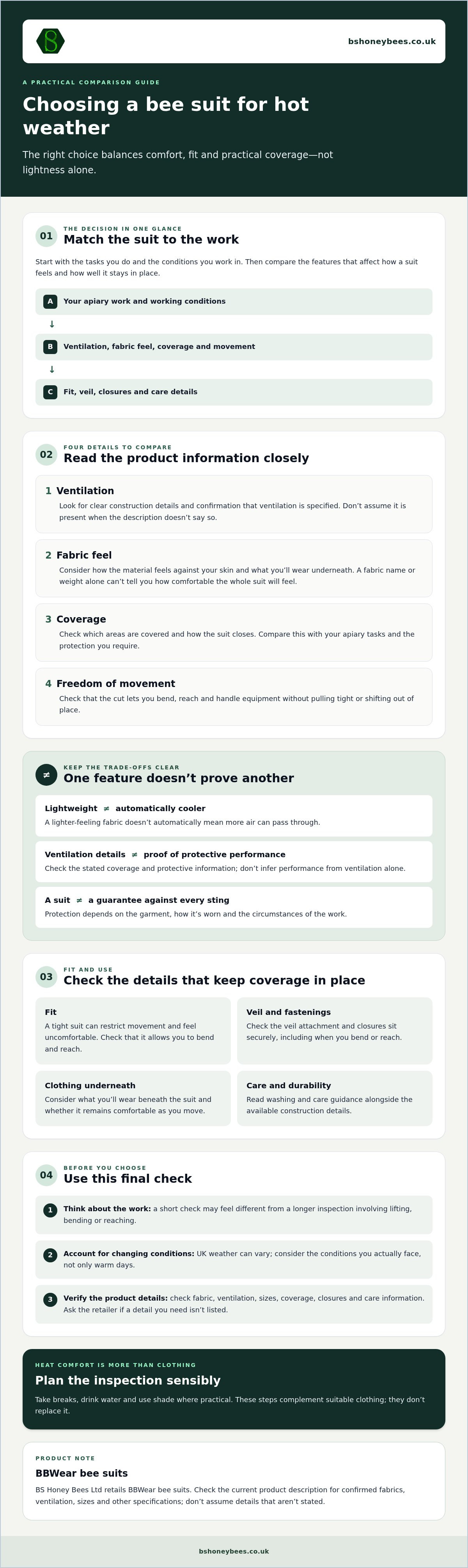
Start with the jobs you actually do. A suit for brief, occasional inspections may not need the same balance of comfort and movement as one worn for longer or more physically demanding apiary work. Use this checklist to narrow down your options before comparing product claims.
- List your typical tasks. Note how often you inspect, how long you’re likely to be working and whether the job involves frequent bending, reaching or lifting.
- Consider your working conditions. Think about warm spells as well as breezy or cooler periods. Check whether the suit can accommodate the layers you may wear underneath without restricting movement.
- Check the fit. Consult the current size chart and consider how the suit sits over your usual clothing. It should allow you to move freely without becoming loose or shifting out of place.
- Review coverage and the veil. Check the product description for the areas covered, veil type and how the veil attaches. Make sure the design suits your work and can be secured as directed.
- Inspect closures and movement. Look for clear details about fastenings. Consider whether you can bend and reach comfortably while keeping the garment in position.
- Check care requirements. Read the washing instructions and any stated care guidance. Choose something you can maintain as directed.
Which suit features fit your beekeeping tasks?
Match the garment to your routine, not just the weather. Short inspections may involve less sustained activity than longer jobs, while repeated reaching or handling equipment makes freedom of movement especially relevant. If you’re new to beekeeping, straightforward fastenings and clear care instructions can make everyday use easier to manage. Check the stated coverage and intended use, and don’t infer either from a product photograph or fabric label.
What should you check before placing an order?
Before ordering, confirm the current size chart, product specifications and returns terms with the retailer. Check whether gloves or other accessories are included; don’t assume they come with the suit. If a detail you need isn’t listed, ask for clarification before deciding. These checks help you judge whether the option matches your work, rather than relying on a general claim that it’s suitable for warm weather.
BS Honey Bees Ltd retails BBWear bee suits, but specific models, sizes and specifications should be checked against current product information. Use your checklist to compare the details, then read the UK bee suit sizing guide for additional fit advice. Ready to review the available options? Compare bee suits from BS Honey Bees Ltd.
Choosing a BBWear bee suit from BS Honey Bees Ltd: your next steps
BS Honey Bees Ltd retails BBWear bee suits as part of its UK-wide beekeeping equipment range. This gives you an option to assess against the tasks and fit requirements you’ve identified. Specific BBWear suit models, fabrics, ventilation, protective ratings, sizes and stock aren’t confirmed here. Check the current product details before deciding whether a suit meets your needs for warmer weather.
What should you confirm about a BBWear suit?
Start with the current product page. Look for specific information rather than relying on a general description, and confirm any details that matter to your decision:
- Fabric and construction: Check the stated material and whether ventilation features are explicitly described.
- Coverage and protection: Review what the suit covers and any protective information provided. Don’t assume a performance rating or that a suit is sting-proof.
- Sizing: Check the current size chart and guidance, including how to account for the clothing you’ll wear underneath.
- Availability: Confirm which sizes and options are currently available before placing an order.
- Unlisted details: Ask the retailer to clarify anything important that isn’t clearly stated, such as care instructions or how the veil attaches.
These checks help separate confirmed specifications from assumptions. If ventilation isn’t mentioned, for example, don’t infer it from a suit’s appearance. If you’re unsure whether the cut allows enough room for your usual layers, confirm the sizing advice before ordering.
How can you make a confident buying decision?
Return to your intended work: how long you’ll wear the suit, how much movement your tasks require and the conditions you expect to face. Then weigh verified construction and coverage details against fit and comfort. The best bee suit for hot weather uk beekeepers choose will depend on those practical needs, not an unverified claim that a particular option is ideal for summer.
BS Honey Bees Ltd’s confirmed range includes BBWear bee suits, but current product details should guide your comparison. Review the available information and ask the retailer about any specifications you need clarified. View the available BBWear bee suits.
Choose your bee suit with confidence
The best bee suit for hot weather uk beekeepers choose isn’t necessarily the lightest. Look for a practical balance of coverage, fit, ventilation details confirmed by the product information and freedom to move during your usual apiary work. Check the veil, closures, care instructions and size guidance before ordering.
BS Honey Bees Ltd retails BBWear bee suits and supplies beekeeping equipment across the UK. Fabric, ventilation, sizes and current availability can vary, so review the specific product details and ask the retailer about anything that isn’t clearly stated. Base your choice on verified information rather than assumptions about hot-weather performance.
Explore the BBWear bee suits available from BS Honey Bees Ltd and use the checks in this guide to find an option that fits your work.
Frequently Asked Questions
What is the best bee suit for hot weather in the UK?
There isn’t one bee suit that’s best for every beekeeper or summer task. The best bee suit for hot weather uk beekeepers choose should balance suitable coverage, a comfortable fit, freedom of movement and any ventilation features confirmed in its product details. Consider how long you work, the tasks you do and the layers you wear underneath. Check the manufacturer’s specifications rather than relying on labels such as “lightweight” alone.
Are ventilated bee suits cooler than cotton bee suits?
A suit described by its manufacturer as ventilated is designed with airflow in mind, but that doesn’t prove it will feel cooler for every wearer or task. Cotton and ventilated suits can differ in construction, fit and coverage, so compare the exact product details rather than treating either fabric type as a guarantee of comfort. Check care instructions too. If ventilation isn’t clearly listed, ask the retailer before assuming a suit has it.
Can you wear a bee suit in hot weather?
Yes, you can wear a bee suit in hot weather, but choose one suited to your work and conditions, and don’t rely on clothing alone to manage heat. Plan sensible breaks, drink water and make use of shade where practical. A suit’s fit and construction can affect comfort during an inspection, but individual experiences vary. If you feel unwell or overheated, stop working and take appropriate steps to cool down.
Does a lightweight bee suit protect against stings?
“Lightweight” by itself doesn’t confirm how a suit performs against stings. Check the garment’s stated construction, coverage and any supporting protective information, and don’t assume that a fabric label or low weight establishes its performance. A bee suit can reduce exposure, but it shouldn’t be treated as sting-proof or a guarantee against every sting. Wear it as directed, secure its closures and follow established beekeeping precautions.
How should a bee suit fit in warm weather?
A bee suit should allow you to bend, reach and handle equipment without pulling tight or restricting movement. Check the current size chart and consider the clothing you’ll wear beneath it, including any layers for changeable conditions. The veil should attach securely, and closures should remain in place as you move. Avoid a fit that shifts or leaves coverage uncertain. Follow the manufacturer’s sizing guidance, and ask the retailer if anything is unclear.
Does BS Honey Bees Ltd sell bee suits for hot weather?
BS Honey Bees Ltd retails BBWear bee suits, but specific hot-weather features, fabrics, ventilation, protective ratings, sizes or current stock aren’t confirmed here. Check the exact product details before deciding whether an option suits warmer apiary work. If a specification you need isn’t listed, ask the retailer for clarification. The company supplies beekeeping equipment to customers across the UK.
What should I check before buying a hot-weather bee suit?
Check the current size chart, stated coverage, fabric and construction details, ventilation claims, veil attachment, closures and care instructions. Make sure the fit allows the movements your apiary tasks require, and confirm whether gloves or other accessories are included rather than assuming they come with the suit. Review any stated protective standard or rating in the manufacturer’s information. Confirm current sizes and availability with the retailer before ordering.